Uncategorized

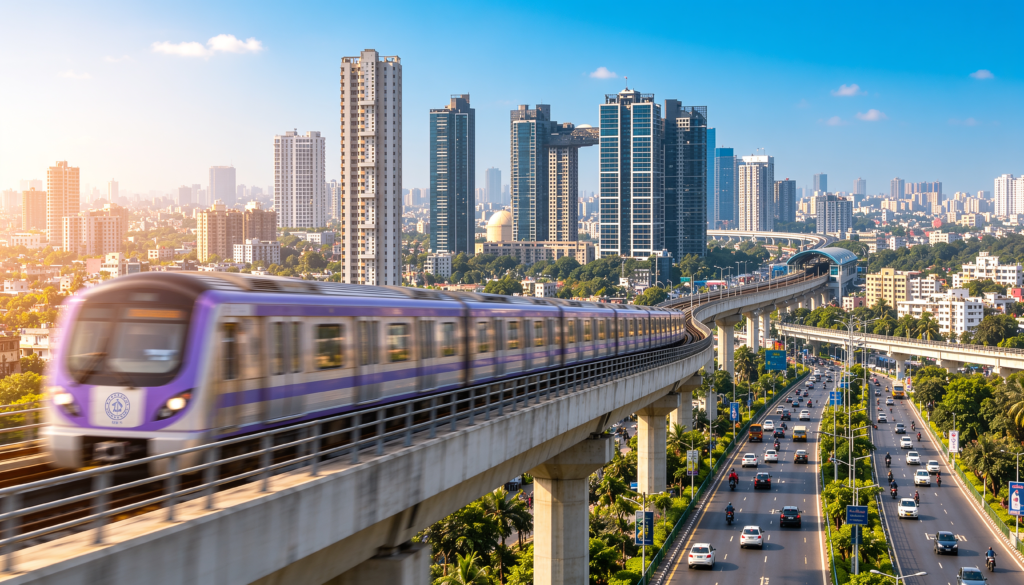
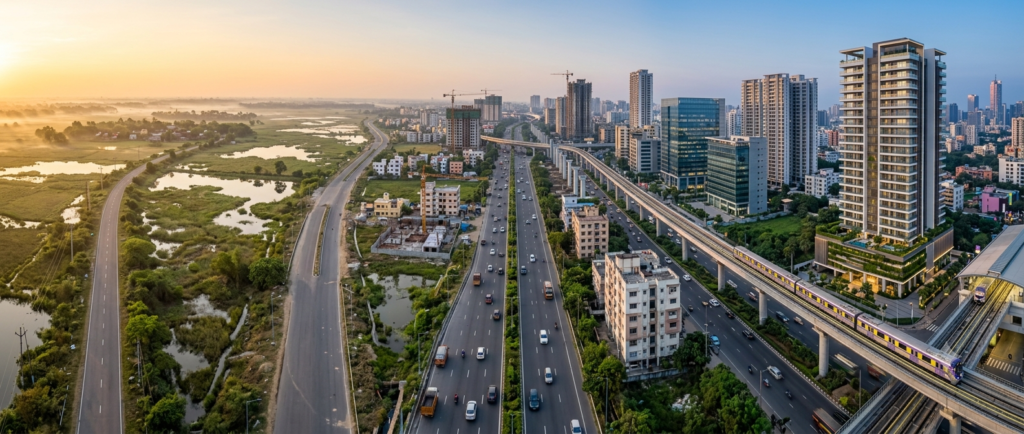
Comparison of New Town, EM Bypass, and South Kolkata showing modern infrastructure, metro connectivity, and residential developments
3 and 4 BHK Flats in Mukundapur, Buying Luxury Property, Luxury Real Estate Developers, Luxury Real Estate Projects, Real Estate Investment, Uncategorized

New Town vs South Kolkata vs EM Bypass: Where Should You Invest in 2026?

mirania Live Closer, Live Better: How Mirania Realty Enhances Work-Life Balance Kolkata’s real estate market is shifting. One corridor is pulling ahead — and the numbers make it hard to argue otherwise. Ask ten Kolkata homebuyers where to invest in 2026, and you will get ten different opinions — each defended with the quiet conviction only a Bengali can muster about their preferred neighbourhood. South Kolkata loyalists will invoke legacy and address. New Town evangelists will talk tech parks and future potential. But there is a third conversation happening, steadily and with growing urgency, along the EM Bypass — and it is starting to drown the other two out. This is not a blog that pretends all three corridors are equal. They are not. For a specific kind of buyer — someone who wants metro connectivity, lifestyle infrastructure, long-term appreciation, and a project that delivers on its promises — the EM Bypass in 2026 is simply the most complete answer Kolkata has to offer. Here is why, laid out honestly. The Three Corridors: A Quick Reality Check Before making the case for the Bypass, it is worth understanding what each corridor is actually offering right now — not in brochures, but on the ground. Parameters New Town / Rajarhat & South Kolkata EM Bypass Character Planned, IT-driven, developing & Heritage, established, legacy Connected, modern, metro-backed Avg. Price (₹/sq ft) ₹5,500–₹18,000+ (Varies from ₹5,500 in New Town to ₹18,000+ in South Kolkata) ₹6,500–₹15,500 Metro Access Orange Line (partial, developing) & Green & Purple Lines Purple Line (fully operational) Rental Yield 2.5–4.5% (2.5–3.5% in South Kolkata, 3–4.5% in New Town) 3.5–5% Capital Appreciation (5–10 Years) High but distant (New Town) & Stable, slow (South Kolkata) High and near-term The table tells part of the story. The rest is in the details.   New Town: The Long Game That Requires Real Patience New Town is a good place to shop. But maybe not the best, for 2026. The new township being built around Rajarhat and Sector V has some things going for it: lots of IT jobs, wide roads, plenty of trees and a proper layout. This is something that South Kolkatas narrow streets don’t have. The Orange Metro Line will connect New Town to the rest of the city eventually. The word to notice there is eventually. Today, New Town still has a liveability gap that matters. Walking to essentials is not always possible. Public transport outside the metro corridor remains inconsistent. The social infrastructure — schools, hospitals, neighbourhood markets with character — is present but thin in comparison to more mature addresses. For an investor with a 10-year horizon and a specific bet on Kolkata’s IT sector, New Town makes sense. For a family buying a home they want to live in from the day of possession, the calculus is harder. New Town is a forward-looking market. Which means, by definition, you are buying what it will become — not what it is.   South Kolkata: Exceptional Address, Exceptional Price Tag There is nothing wrong with South Kolkata. That is almost the problem. Ballygunge, Lake Gardens, Tollygunge, Dhakuria — these are proven, desirable, deeply liveable neighbourhoods that have accumulated value over decades. Metro connectivity via the Green and Purple Lines has addressed the one historical criticism. Schools, hospitals, restaurants, and the irreplaceable texture of an established Kolkata neighbourhood — all present. But getting in today means paying for all of that certainty upfront, often at ₹10,000 to ₹18,000 per square foot for anything genuinely well-appointed. In those brackets, a 3 BHK can easily cross ₹3–4 crore before you have added parking, floor rise, or extras. And at those prices, capital appreciation — while steady — is unlikely to be dramatic. You are not catching a wave; you are boarding a ship that has mostly sailed. For buyers with deep pockets and a preference for legacy addresses, South Kolkata remains excellent. For everyone else, it is increasingly a market to admire from the outside.   EM Bypass: Why 2026 Is the Right Time, Not a Moment Too Late Here is what has changed along the EM Bypass — and why it matters more than most buyers realise. The Metro Has Redrawn the Map The Purple Metro Line, now fully operational through the Bypass corridor, has done something infrastructure rarely manages to do quietly: it has compressed distance. Localities like Barakhola, Panchasayar, Chak Garia, and Narendrapur — which once required navigating Kolkata’s traffic-heavy roads — are now legitimately metro-connected addresses. What used to be a 45-minute drive to Park Street can now be a clean, predictable metro commute. Transit-oriented real estate is not a theory in 2026 — it is documented history across every major Indian metro. Properties within a 500-metre to 1-kilometre radius of metro stations have consistently outperformed their corridors. Kolkata is now living that story, and the Bypass is at the centre of it. What You Actually Get for Your Money This is where the Bypass corridor makes its most compelling argument. At ₹8,500 to ₹15,500 per square foot — depending on the project and specifications — buyers are accessing lifestyle infrastructure that, five years ago, existed only in South Kolkata’s most premium launches. We are talking about projects that deliver: Triple-height sky balconies that change the experience of apartment living Rooftop amenities — infinity pools, stargazing decks, multipurpose courts — that used to be the preserve of ₹5 crore+ properties EV charging per apartment (not shared, not on-request — per unit) Podium-level wellness — dedicated gym floors, steam and sauna, banquet halls, co-working spaces Smart security — video door phones, CCTV across the development Green credentials — rainwater harvesting, sewage treatment, 50% open space The lifestyle gap between the Bypass and South Kolkata’s ultra-premium segment has narrowed dramatically. The price gap has not closed nearly as much. That delta is where genuine value lives. Supply Is Genuinely Constrained Unlike New Town — which still has large land banks and future supply that will continuously compete with existing inventory

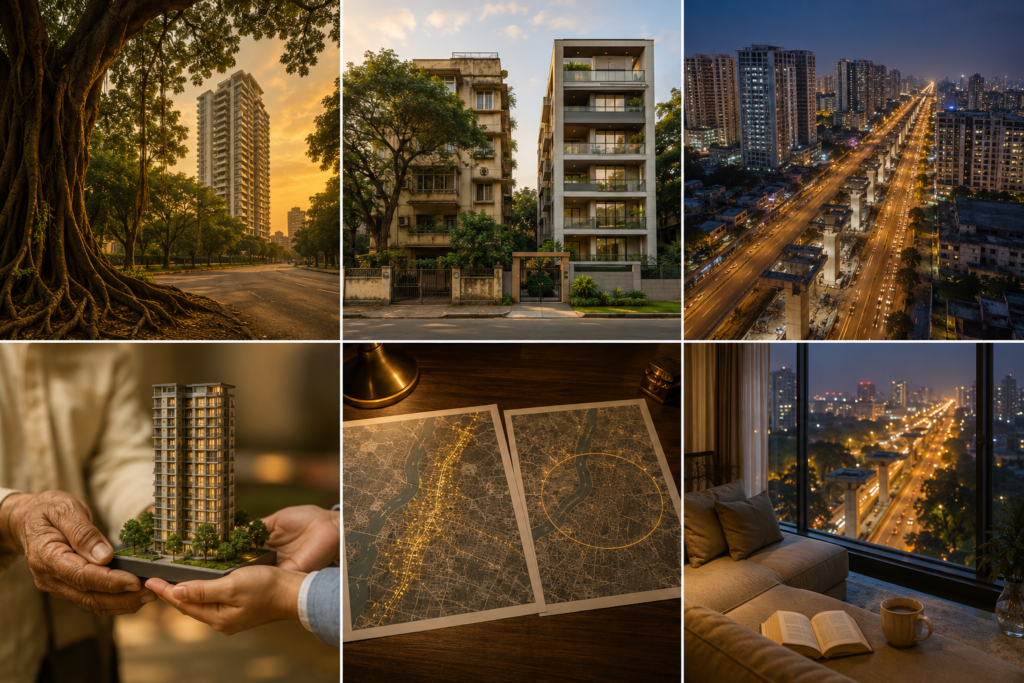
Senior couple walking through landscaped gardens and green open spaces at a residential community in Kolkata
Uncategorized

The Role of Green Spaces in Healthy Aging at Mirania Evara

mirania The Role of Green Spaces in Healthy Aging at Mirania Evara Kolkata is a city that has always lived between two worlds — the weight of its heritage and the momentum of its future. And somewhere in that push and pull, the very definition of a home is being rewritten. Today’s discerning homebuyer isn’t just evaluating carpet area, floor plate efficiency, or proximity to arterial roads. The conversation has shifted — to lifestyle, to liveability, and most profoundly, to well-being. For senior citizens, this shift isn’t just relevant. It’s everything. As life priorities evolve, so does the checklist. The corner office address matters less. What really counts is if my morning walk is enjoyable.Does the air feel fresh? Is there a spot to sit and just breathe? In this way of thinking green spaces. Carefully planned and built into our neighborhoods. Become a must-have, for healthy living. They’re not just a nice extra. A key part of where I want to live. Why Green Spaces Are No Longer an Amenity — They’re an Asset In contemporary real estate, green cover within a residential development has graduated from being a project highlight to a key value driver. For senior homebuyers, it’s arguably the most critical parameter in their due diligence. Well-planned green spaces — landscaped podiums, tree-lined boulevards, curated gardens, and open recreational decks — create microenvironments that organically encourage movement and social engagement. A shaded jogging track invites the 6 AM walker. A nice sitting area outside draws in neighbours for a chat. The garden terrace feels like a part of the house it’s where life happens. It’s a place where you can relax and talk to people who live nearby. The garden terrace is really an extension of your home. The difference between a green residential community and a conventional high-density project isn’t just aesthetic square footage — it’s quality of life, measured every single day. Physical Health: Where Green Cover Meets Gross Living Area Smart developers and buyers are beginning to understand something that architects have long known: the outdoor environment is as much a part of the home as the internal layout. And for elderly residents, this outdoor environment has direct, measurable physical health implications. Landscaped walkways and green corridors encourage light physical activity — the kind that doesn’t feel like effort but quietly builds endurance, flexibility, and cardiovascular health over time. Unlike club-level amenities such as gyms or sports courts, which may feel intimidating or require structured effort, green spaces offer passive wellness — benefits that accrue simply by being present in a thoughtfully designed environment. In a city like Kolkata, where urban density and vehicular pollution are ongoing concerns, residential projects that deliver meaningful green cover are also delivering something increasingly rare: clean air within the project boundary. For senior residents with respiratory sensitivities, this is a genuine differentiator — one that no square footage upgrade can substitute. Mental Well-Being: The Intangible That Drives Real Value If physical health is the tangible return on green space investment, mental well-being is the intangible — and arguably more significant — return. Aging in a city can feel lonely. The excitement that used to give you energy now feels much to handle. For senior residents navigating this transition, the built environment plays a quietly powerful role. A project that has spaces where you can breathe easily. Like views of the open sky trees all around natural light and nice gardens. Makes a home that is peaceful instead of stressful. Studies show that being around nature helps people feel less stressed, happier and think clearly. For people who own homes green breathing spaces make their daily life calmer more stable and more like how green breathing spaces should be. There is also a personal side, to green breathing spaces. For Kolkata’s senior residents, greenery often carries emotional resonance — memories of neighbourhood parks, of morning adda under the shade of a tree, of evenings that moved slowly and pleasantly. A residential community that recreates that environment within its own project footprint isn’t just offering amenities — it’s offering a sense of belonging that no specification sheet can fully capture. Community Living and Social Infrastructure: Beyond the Club Membership Progressive real estate developers recognise that social infrastructure is as important as physical infrastructure. Green spaces, when well-designed within a residential complex, become the project’s most democratic and high-utilisation social spaces. Unlike enclosed amenity floors, green areas feel naturally open and welcoming. The community becomes a lot friendlier when senior residents feel comfortable. Senior residents are more likely to go for a walk talk to a neighbour or sit in a shared space when the community feels nice and easy to be in. These small talks. Like saying hello near the garden seeing a face on the morning walk. Are what make a residential community a nice place to live. These small interactions are what make the community feel like a community. Senior residents and neighbours can have these talks every day like when they see each other on the morning circuit track or, in a shared space. For elderly homeowners, this fabric is not a luxury. It is a lifeline. In the evolving taxonomy of real estate, community living is increasingly recognised as a product feature in its own right. Projects that engineer organic social interaction through their landscaping and open-space planning are, in effect, delivering a superior residential product — one that ages better and retains liveability over the full lifecycle of ownership. Safety, Accessibility, and Universal Design For people living in a community the buildings and surroundings must meet many needs at the same time. Safety and accessibility are very important. Green spaces, in end residential areas are being designed to be easy to use for everyone. * They have smooth and well-lit walkways. * Gentle slopes instead of steps. * Penty of places to sit. * Clear views that help people move around with confidence. Lighting in spaces is really important. It needs to be

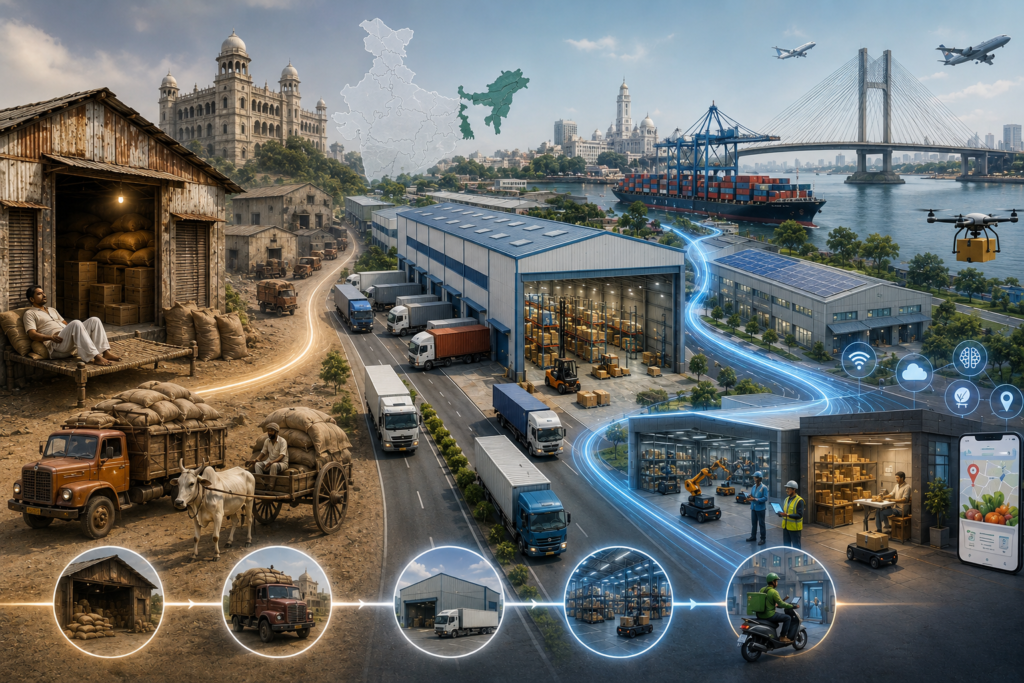
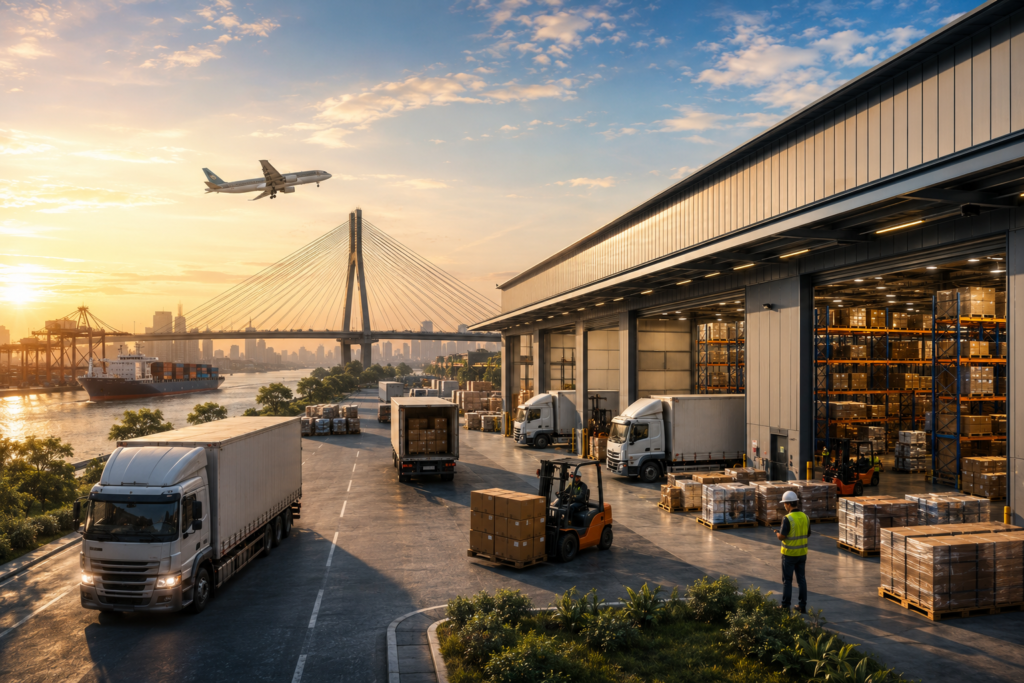
3PL logistics and warehouse infrastructure in Kolkata supporting supply chain, transportation, and distribution networks
Uncategorized

3PL Logistics in Kolkata: Why the Market Is Rebounding and What It Means for Businesses

mirania 3PL Logistics in Kolkata: Why the Market Is Rebounding and What It Means for Businesses If you have been watching Kolkata’s warehousing scene for a years now you would be forgiven for thinking it is not very active. For a time Kolkata’s warehousing scene was really slow. The market had the bones of something significant — port access, rail links, a massive geographic advantage for reaching East and Northeast India — but it never quite lived up to its potential. There was not good quality supply and the infrastructure was not very good, in some areas. The prices were also not right because they did not match what people were really willing to pay. This kept everything from moving Now things are. It does not feel like it is just a small improvement that will go away. The change feels like it is going to last. The part of the business that deals with storing goods in West Bengal and especially in Kolkata is really starting to grow. The engine driving much of it is 3PL — Third-Party Logistics. How We Got Here Kolkata’s logistics roots run deep. The city was built, in many ways, around trade — port-led commerce, freight rail, traditional manufacturing. Those fundamentals gave the market stability, but they weren’t designed for the demands of modern supply chains: the speed of e-commerce, the volume of FMCG (Fast-Moving Consumer Goods), the expectations of organised retail. By 2024–2025, the cracks were showing. Total leasing dropped from 6.3 million sq ft to 4.6 million sq ft — a 30% YoY decline that, on the surface, looked alarming. High land acquisition costs made it harder to develop Grade A (institutional-quality) warehousing. Even 3PL players, usually the most active occupiers, pulled back — their leasing share fell from 42% to 32% as consolidation swept through the sector. But here’s what that data doesn’t tell you: this wasn’t demand drying up. It was the market fixing itself making room for something. By 2026 the numbers started to show a very different picture. Industrial transactions jumped a lot in Q1 2026. 400 Percent more, than the same time the year before. Manufacturing came back with momentum, accounting for 21% of demand. Institutional investors — the kind who don’t move on sentiment alone — began actively looking at Grade A warehousing assets in East India. Kolkata isn’t just recovering. It’s recalibrating. Why Businesses Are Turning to 3PL There’s a change in how companies think about their supply chains. Logistics used to be something you handled. Now it’s something you use to stay. This change is why third-party logistics or 3PL has become very important for businesses, in Kolkata. It’s now a part of how they work. The appeal is multi-layered. At the most fundamental level, a good 3PL provider gives you end-to-end supply chain integration — storage, transportation, and last-mile delivery all under one roof. That eliminates the fragmentation that plagues businesses who try to stitch together multiple vendors. Then there’s the financial logic. Building your own warehousing and fleet means heavy CapEx (Capital Expenditure) — land, infrastructure, vehicles. With 3PL, you shift to an OpEx (Operating Expenditure) model, paying for what you use when you use it. For startups and growing businesses having flexibility is really important. It can mean the difference, between staying and stretching themselves too thin. Scalability matters enormously here too. If your business is entering East India or pushing deeper into Tier II and III cities, the last thing you want is your growth capped by physical infrastructure constraints. 3PL removes that ceiling. And beyond logistics, there’s genuine domain expertise on offer — inventory optimisation, freight consolidation, customs clearance, reverse logistics. These aren’t things most businesses want to develop in-house, and frankly, they don’t need to. Kolkata’s geographic position adds another layer of strategic value. The city sits at the gateway to East and Northeast India — a region with rising consumption but historically limited logistics penetration. For any business serious about that market, Kolkata isn’t optional. It’s the natural distribution hub. Add in strong rail-road-port connectivity that supports efficient EXIM (Export-Import) logistics, and the case for basing your 3PL operations here becomes even harder to argue against. The Micro-Markets That Actually Matter Not every corner of Kolkata contributes equally to logistics activity. A few locations are doing most of the heavy lifting. Dankuni and its surrounding areas hold roughly 60% of the market. It’s not hard to see why — proximity to the Durgapur Expressway and Old Delhi Road, solid labour availability, and direct access to Northeast corridors make it the most strategically positioned logistics hub in the region. The NH-16 Corridor accounts for around 40% of activity, buoyed by improved Grade A supply and seamless connectivity toward Odisha and beyond. Beyond these two dominant zones, a cluster of emerging locations is quietly building momentum: Sankrail Industrial Park for shared warehousing and industrial zoning; Panchghara, Biparna Para, and Dhulagarhi for FMCG-oriented operations; and Domjur in Howrah, where mid-sized 3PL facilities of around 10,000 sq ft are increasingly active. What ties these together is a clear trend toward decentralised warehousing — spreading capacity across connected nodes rather than concentrating it in one place. Infrastructure: The Real Game-Changer No logistics ecosystem improves without the underlying infrastructure to support it, and Kolkata is seeing a wave of upgrades that are directly impacting 3PL viability. The Kharagpur–Moregram Corridor alone cuts freight time by 7–8 hours, which translates to a 30% reduction in logistics costs — a number that gets anyone’s attention. The Kolkata–Varanasi Expressway shaves 6–8 hours off North India connectivity. The JSW Container Terminal at Haldia expands port capacity and supports containerised logistics. The Durgapur Expressway expansion is expected to drive around 40% of leasing activity along that belt. Even the East–West Metro, connecting Sector V to Howrah in 30 minutes, improves workforce mobility for logistics operations along the corridor. There’s also the ₹1,839 crore Haldia dredging subsidy, which should meaningfully improve coastal shipping efficiency once it takes effect. Collectively,

Modern commercial office building in Kolkata offering flexible office spaces for lease with premium business infrastructure
Uncategorized

Lease vs Buy Office Space: Best Choice for Growing Businesses

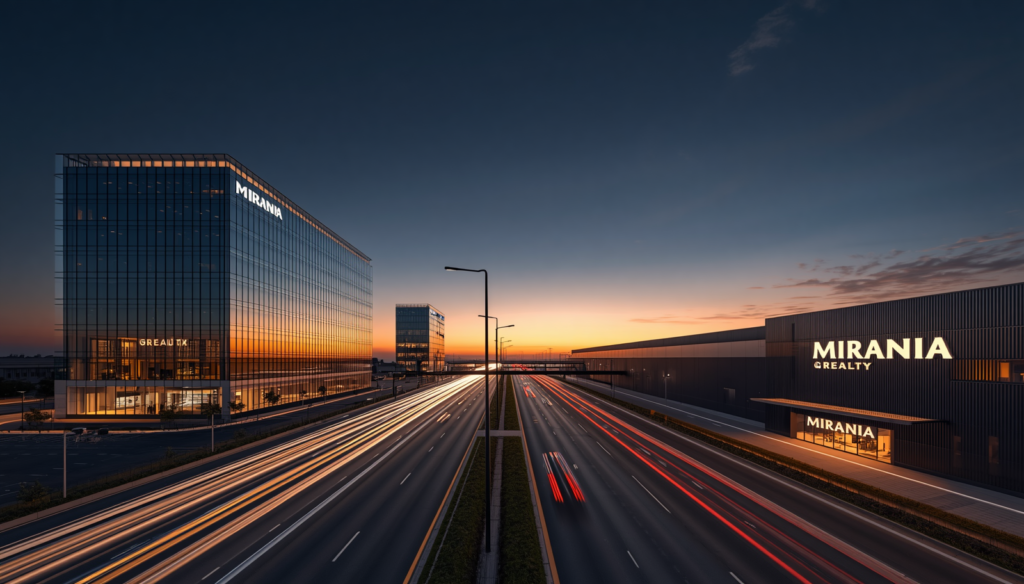
mirania Lease vs Buy Office Space: Best Choice for Growing Businesses For every expanding business, there arrives a moment when office space transcends being merely an operational necessity. It evolves into a strategic choice. As teams grow, client meetings proliferate and business operations become more structured, organisations often find themselves asking an essential question. Should we buy a commercial office space or rent one? The response is not always simple. Both options come with their own pros and cons and they each carry long-term consequences. But in today’s fast-moving business world, more and more companies are opting to lease high-quality office space instead of buying it outright. There are practical justifications for this transition. According to numerous commercial real estate reports, the office market in India has consistently witnessed remarkable leasing activity, driven by expanding businesses, multinational corporations, technology firms, BFSI companies, and providers of flexible workspaces. The demand for premium office infrastructure is at an all-time high. The rationale is clear. Modern businesses prioritize agility. Understanding the Difference: Factor Buying Commercial Space Renting Commercial Space Initial Investment High capital requirement Lower upfront investment Business Flexibility Limited High Expansion Possibility Depends on owned area Easier to scale Asset Creation Yes No Operational Freedom High Moderate Cash Flow Pressure Higher initially More manageable Relocation Ease Difficult Easier While ownership establishes a long-term asset, leasing enables businesses to conserve capital and concentrate on growth. For numerous contemporary businesses, this flexibility presents a considerable advantage. Why Many Businesses Prefer Renting Today It was considered the ultimate business accomplishment to have one’s own office just a few years ago. Now that view is changing. Companies are increasingly focusing on operational efficiency rather than merely accumulating assets during their growth stages. Rather than committing a large sum of capital to property purchases, businesses are channelling their investments into: Team expansion. Technology. Marketing. Business development. Product growth. Operational scalability. Leasing an office enables organizations to utilize high-quality commercial infrastructure without significantly impacting their working capital. This is a primary reason why office leasing in India has consistently reached record levels in recent years. The Hidden Cost of Buying Too Early Acquiring a commercial office undoubtedly provides long-term benefits. Nevertheless, making a purchase prematurely can impose restrictions. A company might exceed the capacity of the premises. A new commercial area could develop. The needs of the workforce may shift. Market dynamics may transform. Under these conditions, ownership can at times be more limiting than liberating.  This is especially true of new companies that are scaling their operations and adapting to shifting market opportunities. What Businesses Actually Need Today The workplace has experienced considerable transformations. Contemporary organizations no longer focus solely on a physical area characterized by four walls and a desk layout. They emphasize settings that boost productivity, guarantee employee comfort, convey a professional appearance, and foster operational efficiency. Key elements that companies now consider include: What Businesses Look For in an Office Space ✓ Strategic location. ✓ Strong connectivity. ✓ Modern infrastructure. ✓ Professional business environment. ✓ Ample parking. ✓ High-speed vertical mobility. ✓ Security systems. ✓ Power reliability. ✓ Ventilation and natural lighting. ✓ Scalability for future growth. The focus has shifted from simply occupying a space to operating from a space that supports business performance.   Why Premium Commercial Buildings Are Seeing Higher Demand The demand for Grade-A commercial properties in India is on the rise as compared to traditional office spaces. The reasoning goes beyond simple visual appeal. Premium commercial environments allow organizations to make a more substantial impression on clients, improve employee contentment, and support more effective daily operations. Market studies indicate that tenants are progressively leaning towards contemporary office assets that provide enhanced infrastructure and workplace quality. In the current competitive landscape, the location of an office itself contributes to the brand identity. When Renting Makes More Strategic Sense Renting becomes a particularly strong option when: Renting Makes Sense If… Your enterprise is experiencing swift growth. You aim to maintain your working capital. The size of your team may grow in the coming years . You value operational flexibility. You seek immediate access to high-quality infrastructure. You desire a distinguished business address without significant capital investment. For numerous small and medium-sized enterprises, professional service firms, consultancies, technology companies, healthcare organizations, trading firms, and emerging businesses, leasing offers a pragmatic equilibrium between expansion and financial efficiency. Why Mirania Horizon Is Designed for Modern Businesses As organizations reevaluate their operational strategies and locations, the emphasis has transitioned from traditional office environments. The priority is now on business ecosystems. In this regard, Mirania Horizon sets itself apart. Designed as a modern commercial centre, Mirania Horizon offers businesses the opportunity to operate within a premium corporate environment without the burdens linked to direct property ownership.   Key Advantages at Mirania Horizon Business Requirement How Mirania Horizon Supports It Professional Business Presence Modern commercial architecture Accessibility Strategic location with excellent connectivity Employee Convenience Well-connected urban surroundings Operational Efficiency High-quality infrastructure and services Scalability Office space options for growing businesses Corporate Image Premium business environment Future Readiness Designed for evolving business requirements Whether you are a start-up, a mature corporation, a consulting firm, a technology company or a business seeking to improve its market presence, the right office environment can make a huge difference to perception and performance. In addition, more and more companies are coming to realise that owning a physical location is not a prerequisite for enjoying the benefits of a prestigious address. At times, the more astute decision is to function from the most suitable location. The Decision Is Not About Real Estate. It Is About Business Strategy. The lease-versus-buy debate will continue. For some businesses, ownership will always be the right long-term path. For many others, especially during growth phases, leasing offers a more agile, efficient, and scalable solution. The real question is not: “Should we go with buying or renting?” The real question is: “What kind of environment would really help our business take off and grow quicker?” These days, your

Uncategorized

Mirania Magic: Crafting Iconic Landmarks for Tomorrow’s Kolkata

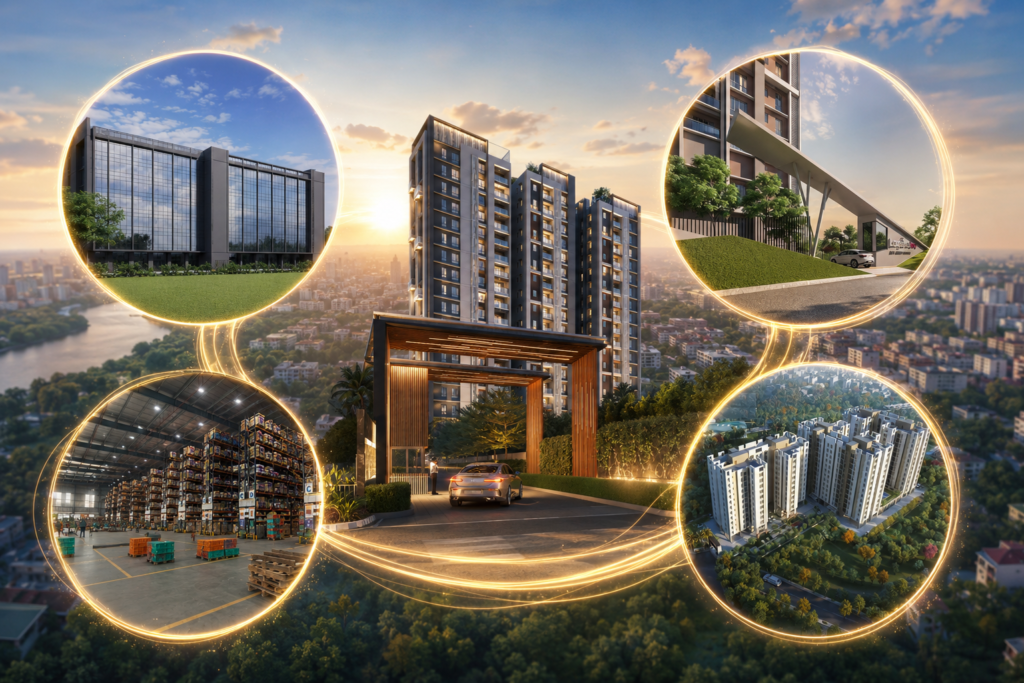
mirania Mirania Magic: Crafting Iconic Landmarks for Tomorrow’s Kolkata Mirania Realty is carving a niche for itself by transforming the landscape of Kolkata into a tableau of iconic landmarks. As one of the leading developers in a city steeped in history and culture, Mirania Realty is synonymous with luxury, innovation, and sustainability. Their latest projects are not just buildings; they are masterpieces of modern architecture, designed to become the landmarks of tomorrow. Innovating with Elegance and Precision Mirania Realty’s approach to creating these iconic structures is rooted in a deep understanding of the desires and needs of contemporary urban dwellers. Each project is meticulously planned and crafted with the utmost precision, ensuring that every detail enhances the living experience. The company’s dedication to excellence is evident in the seamless integration of state-of-the-art technology with elegant designs, setting new benchmarks in the real estate industry. Signature Mirania Projects that Define Luxury Laguna Bay on Matheswartala Road, offering spacious 2 and 3-BHK homes near the ILEAD Campus, is an ongoing project that promises contemporary living spaces. The Address, located on the bustling EM Bypass Road, features luxurious 3 and 4 BHK apartments and is a testament to the company’s commitment to delivering completed ready-to-move-in residences. Lakewood Estate, nestled in Patuli, offers a range of 2, 3, and 4 BHK homes, combining modern amenities with serene living conditions. The commercial real estate scene is equally enriched by Mirania with completed projects like Stanley, Mirania Lakefront on East Topsia Road, and Mirania Inocia on Lower Range. A Commitment to Luxury and Functionality Mirania Realty’s developments are celebrated for their luxurious amenities, which are thoughtfully incorporated to cater to both comfort and functionality. These amenities are not just add-ons but are integral to the lifestyle that Mirania promises. From state-of-the-art gymnasiums and serene wellness centres to sprawling green spaces and interactive play areas for children, every facility is designed to enrich the lives of its residents. The interiors of each Mirania home are a testament to the company’s commitment to quality and craftsmanship. High ceilings, spacious layouts, premium materials, and designer finishes are standard, ensuring that each residence is as opulent as it is comfortable. The attention to detail extends to the intelligent home automation systems that offer convenience at the touch of a button, reflecting the modernity and sophistication that are hallmarks of Mirania Realty. Redefining Kolkata’s Architectural Heritage While Mirania Realty is forward-thinking in its designs, it remains deeply respectful of Kolkata’s rich architectural heritage. This reverence is woven into the fabric of its projects, which echo the city’s cultural legacy while propelling it into the future. By blending traditional motifs with modern aesthetics, Mirania is playing a crucial role in preserving the city’s historical charm while ensuring its growth remains dynamic and sustainable. The impact of Mirania Realty on Kolkata’s real estate market is profound. Through innovative design, strategic location choices, and a relentless pursuit of excellence, Mirania is not just building homes but is shaping the future of urban living in Kolkata. Each project under the Mirania banner is more than just a physical structure; it is a vibrant community, a sanctuary for its residents, and a beacon of architectural brilliance. Conclusion As Kolkata continues to grow and evolve, Mirania Realty’s commitment to building landmark properties ensures that the city’s skyline not only reaches higher but grows richer in design and functionality. The magic of Mirania is evident in every corner of the city, promising a future where both heritage and innovation thrive side by side. For those looking to experience the pinnacle of luxury urban living, Mirania Realty remains the gold standard, constantly pushing the boundaries of what is possible in real estate development.

Uncategorized

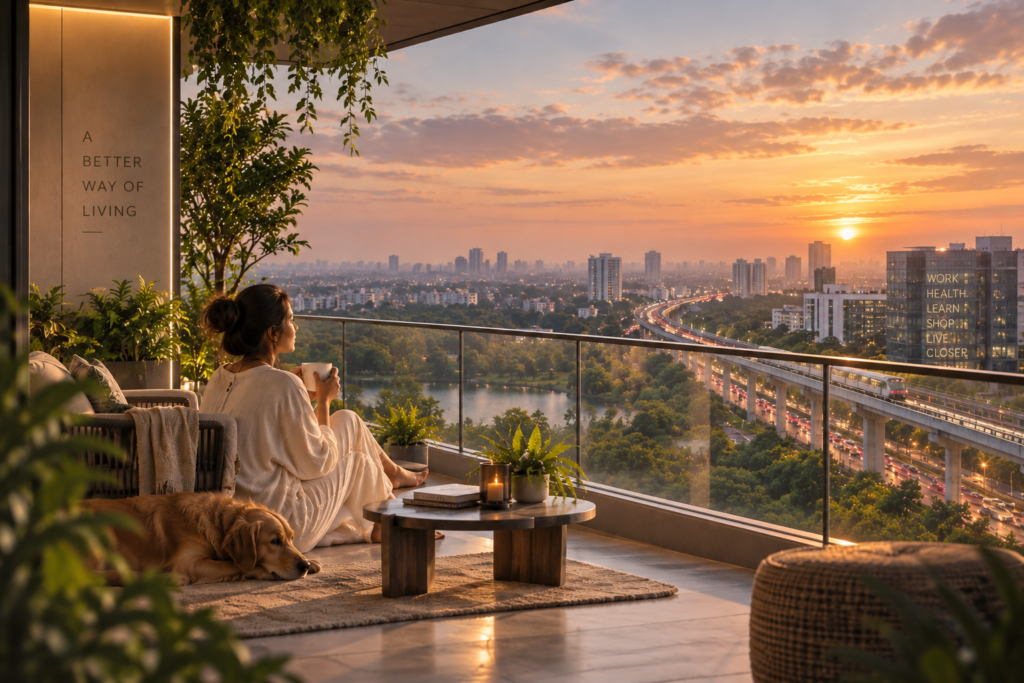
Live Closer, Live Better: How Mirania Realty Enhances Work-Life Balance

mirania Live Closer, Live Better: How Mirania Realty Enhances Work-Life Balance Mirania Realty has carved a niche for itself in Kolkata’s real estate landscape by strategically situating its projects in locations that significantly boost the quality of life. This thoughtful positioning near key industrial areas and burgeoning IT hubs, coupled with exceptional connectivity, solidifies Mirania’s commitment to offering much more than mere living or working spaces. Strategic Locations for Optimal Balance Mirania Realty’s projects are meticulously located to bridge the gap between residential comfort and workplace accessibility. Projects like Laguna Bay and Lakewood Estate are prime examples of residential complexes designed to offer a serene living environment while being just a short commute away from major commercial zones. Laguna Bay, situated near the ILEAD Campus on Matheswartala Road, is ideally positioned for those working in the nearby business districts and IT hubs. This proximity allows for minimal travel times, thereby enhancing daily productivity and providing residents with more time to enjoy their home life. Lakewood Estate in Patuli is another stellar project that offers easy access to several IT parks and commercial centres via the EM Bypass, a critical arterial road connecting various parts of the city. The location ensures that professionals have a stress-free commute, contributing to a balanced lifestyle where personal time and professional responsibilities coexist harmoniously. Enhanced Connectivity to Kolkata’s Business Nerve Centres Mirania Realty’s commercial projects like Stanley, The 56, and Mirania Lakefront on East Topsia Road are situated in one of Kolkata’s fastest-growing business areas. These locations are not just focal points for current economic activities but are also burgeoning with new developments, including IT parks and commercial plazas, making them highly desirable for businesses and investors alike. The strategic positioning along major thoroughfares ensures seamless connectivity to the rest of the city, including quick routes to Kolkata’s IT hub in Salt Lake Sector V and the upcoming financial and IT district in New Town. This connectivity is vital for the modern workforce, who value reduced commute times and more opportunities for leisure and family time. Commitment to Sustainable Urban Growth Mirania Realty’s commitment extends beyond mere construction; its projects are a testament to sustainable and intelligent urban planning. By integrating green spaces and amenities that promote health and well-being, Mirania not only enhances the aesthetic value of its developments but also contributes to the overall quality of life for its inhabitants. Conclusion For those seeking a perfect blend of accessibility, comfort, and luxury, Mirania Realty offers an ideal solution. Their well-thought-out locations and focus on connectivity provide residents and businesses with the unique opportunity to enhance their work-life balance significantly. In bustling Kolkata, where time is as valuable as space, choosing Mirania Realty means choosing a lifestyle where every minute counts, both at work and at home.

contact us

Mirania Horizon, 1005 EM Bypass Kolkata, West Bengal 700105

M – 033 7148 2042
E – info@mirania.com

Subscribe Newsletter

© Copyright 2026 Mirania Realty LLP | All Rights Reserved.