Real Estate Investment

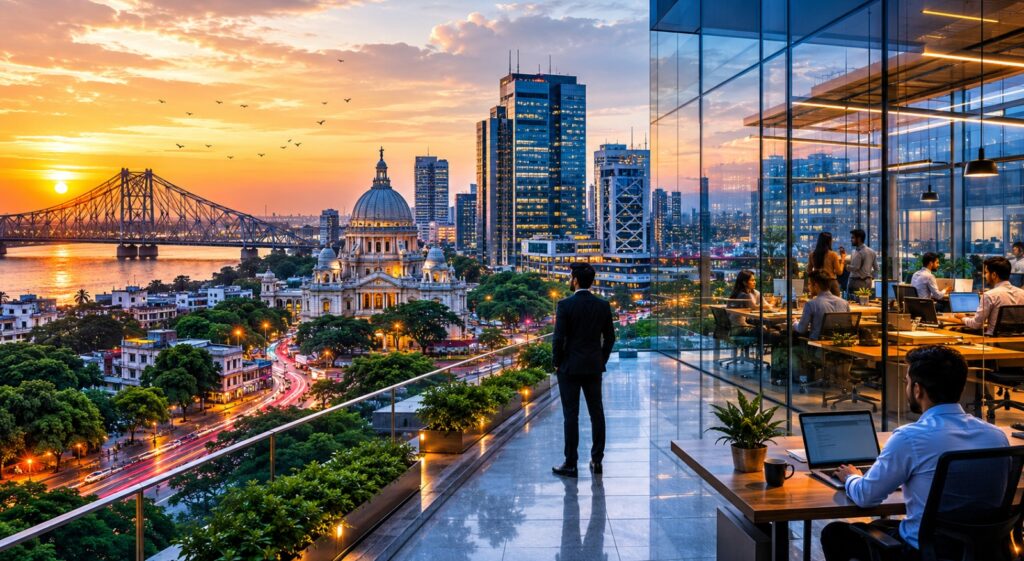
Comparison of New Town, EM Bypass, and South Kolkata showing modern infrastructure, metro connectivity, and residential developments
3 and 4 BHK Flats in Mukundapur, Buying Luxury Property, Luxury Real Estate Developers, Luxury Real Estate Projects, Real Estate Investment, Uncategorized

New Town vs South Kolkata vs EM Bypass: Where Should You Invest in 2026?

mirania Live Closer, Live Better: How Mirania Realty Enhances Work-Life Balance Kolkata’s real estate market is shifting. One corridor is pulling ahead — and the numbers make it hard to argue otherwise. Ask ten Kolkata homebuyers where to invest in 2026, and you will get ten different opinions — each defended with the quiet conviction only a Bengali can muster about their preferred neighbourhood. South Kolkata loyalists will invoke legacy and address. New Town evangelists will talk tech parks and future potential. But there is a third conversation happening, steadily and with growing urgency, along the EM Bypass — and it is starting to drown the other two out. This is not a blog that pretends all three corridors are equal. They are not. For a specific kind of buyer — someone who wants metro connectivity, lifestyle infrastructure, long-term appreciation, and a project that delivers on its promises — the EM Bypass in 2026 is simply the most complete answer Kolkata has to offer. Here is why, laid out honestly. The Three Corridors: A Quick Reality Check Before making the case for the Bypass, it is worth understanding what each corridor is actually offering right now — not in brochures, but on the ground. Parameters New Town / Rajarhat & South Kolkata EM Bypass Character Planned, IT-driven, developing & Heritage, established, legacy Connected, modern, metro-backed Avg. Price (₹/sq ft) ₹5,500–₹18,000+ (Varies from ₹5,500 in New Town to ₹18,000+ in South Kolkata) ₹6,500–₹15,500 Metro Access Orange Line (partial, developing) & Green & Purple Lines Purple Line (fully operational) Rental Yield 2.5–4.5% (2.5–3.5% in South Kolkata, 3–4.5% in New Town) 3.5–5% Capital Appreciation (5–10 Years) High but distant (New Town) & Stable, slow (South Kolkata) High and near-term The table tells part of the story. The rest is in the details.   New Town: The Long Game That Requires Real Patience New Town is a good place to shop. But maybe not the best, for 2026. The new township being built around Rajarhat and Sector V has some things going for it: lots of IT jobs, wide roads, plenty of trees and a proper layout. This is something that South Kolkatas narrow streets don’t have. The Orange Metro Line will connect New Town to the rest of the city eventually. The word to notice there is eventually. Today, New Town still has a liveability gap that matters. Walking to essentials is not always possible. Public transport outside the metro corridor remains inconsistent. The social infrastructure — schools, hospitals, neighbourhood markets with character — is present but thin in comparison to more mature addresses. For an investor with a 10-year horizon and a specific bet on Kolkata’s IT sector, New Town makes sense. For a family buying a home they want to live in from the day of possession, the calculus is harder. New Town is a forward-looking market. Which means, by definition, you are buying what it will become — not what it is.   South Kolkata: Exceptional Address, Exceptional Price Tag There is nothing wrong with South Kolkata. That is almost the problem. Ballygunge, Lake Gardens, Tollygunge, Dhakuria — these are proven, desirable, deeply liveable neighbourhoods that have accumulated value over decades. Metro connectivity via the Green and Purple Lines has addressed the one historical criticism. Schools, hospitals, restaurants, and the irreplaceable texture of an established Kolkata neighbourhood — all present. But getting in today means paying for all of that certainty upfront, often at ₹10,000 to ₹18,000 per square foot for anything genuinely well-appointed. In those brackets, a 3 BHK can easily cross ₹3–4 crore before you have added parking, floor rise, or extras. And at those prices, capital appreciation — while steady — is unlikely to be dramatic. You are not catching a wave; you are boarding a ship that has mostly sailed. For buyers with deep pockets and a preference for legacy addresses, South Kolkata remains excellent. For everyone else, it is increasingly a market to admire from the outside.   EM Bypass: Why 2026 Is the Right Time, Not a Moment Too Late Here is what has changed along the EM Bypass — and why it matters more than most buyers realise. The Metro Has Redrawn the Map The Purple Metro Line, now fully operational through the Bypass corridor, has done something infrastructure rarely manages to do quietly: it has compressed distance. Localities like Barakhola, Panchasayar, Chak Garia, and Narendrapur — which once required navigating Kolkata’s traffic-heavy roads — are now legitimately metro-connected addresses. What used to be a 45-minute drive to Park Street can now be a clean, predictable metro commute. Transit-oriented real estate is not a theory in 2026 — it is documented history across every major Indian metro. Properties within a 500-metre to 1-kilometre radius of metro stations have consistently outperformed their corridors. Kolkata is now living that story, and the Bypass is at the centre of it. What You Actually Get for Your Money This is where the Bypass corridor makes its most compelling argument. At ₹8,500 to ₹15,500 per square foot — depending on the project and specifications — buyers are accessing lifestyle infrastructure that, five years ago, existed only in South Kolkata’s most premium launches. We are talking about projects that deliver: Triple-height sky balconies that change the experience of apartment living Rooftop amenities — infinity pools, stargazing decks, multipurpose courts — that used to be the preserve of ₹5 crore+ properties EV charging per apartment (not shared, not on-request — per unit) Podium-level wellness — dedicated gym floors, steam and sauna, banquet halls, co-working spaces Smart security — video door phones, CCTV across the development Green credentials — rainwater harvesting, sewage treatment, 50% open space The lifestyle gap between the Bypass and South Kolkata’s ultra-premium segment has narrowed dramatically. The price gap has not closed nearly as much. That delta is where genuine value lives. Supply Is Genuinely Constrained Unlike New Town — which still has large land banks and future supply that will continuously compete with existing inventory
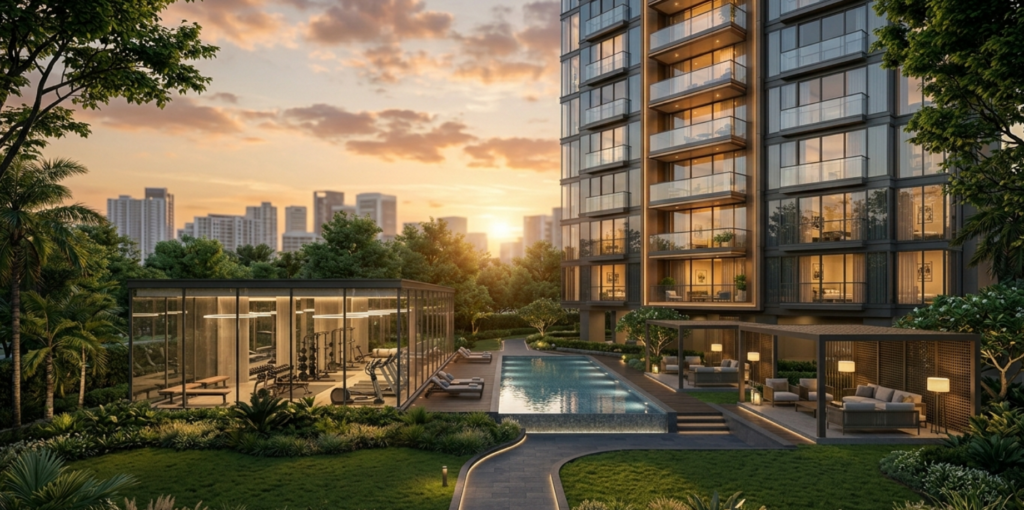
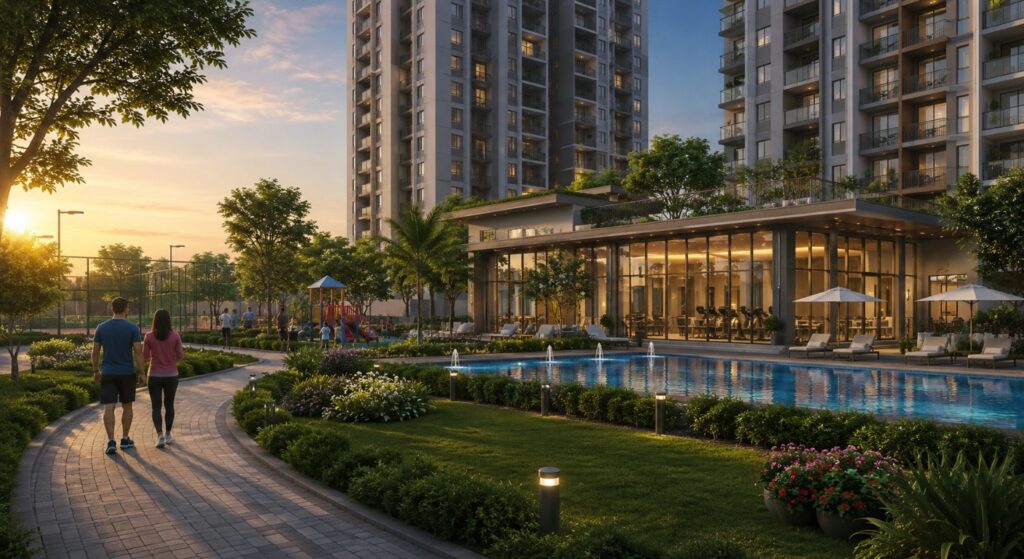
Luxury residential community with wellness amenities, open spaces, swimming pool, fitness center, and landscaped gardens
3 and 4 BHK Flats in Mukundapur, Buying Luxury Property, Luxury Real Estate Developers, Luxury Real Estate Projects, Premium Real Estate Company, Real Estate Investment

From Ownership to Experience: How the Transformation Economy is Redefining What Homebuyers in India Really Want

mirania Transformation Economy & Modern Homebuyers in India There was a time — not so long ago — when buying a home meant one thing above all else i.e security. A flat in a good location, a reasonable price per square foot, and a possession date you could trust. The home was an asset. A number on a balance sheet. Indians bought real estate the way their parents had — as a hedge against the future, a brick-and-mortar savings account. That time has quietly, irreversibly passed. Across India’s premium residential real estate landscape, something more profound than a trend is underway. The homebuyer of 2025 — whether she is a 34-year-old hybrid-working professional in Bengaluru, a newly NRI-returned couple eyeing luxury apartments in Kolkata, or a senior citizen seeking a low-density gated community that offers both peace and belonging — is asking an entirely different set of questions. Not just what does this home cost? but what will this home do for my life? Economists and urban researchers have begun calling this the Transformation Economy — a consumer shift where people invest not in things, but in who they want to become. In real estate terms, this translates directly: the modern homebuyer is no longer purchasing square footage. She is purchasing a way of living.   The Shift in Homebuyer Priorities For decades, the residential real estate market evaluated itself by a predictable set of parameters. Those parameters have not disappeared — but they have been completely displaced from the centre of the decision. Parameter Earlier Buyer Mindset Today’s Buyer Mindset Purpose Asset creation Lifestyle enhancement Evaluation Criteria Price, size, location Wellness, experience, community Luxury Definition Bigger space, premium fittings Better living experience Usage of Home Living + storage Living + working + socialising Decision Driver Financial return Quality of life   Today’s premium homebuyer walks through a sample flat and asks: Does this feel calm? She looks at the master bedroom window and wonders about cross-ventilation and natural light. She checks — sometimes before she checks the price — whether the project has a co-working space, a meditation zone, a walking track. She wants to know the density: how many units per floor, what percentage of the site is open space. This is not irrationality. This is a generation that has lived through a pandemic in undersized apartments and emerged with a bone-deep understanding of what poor living conditions cost them.   Key Drivers Behind the Transformation Economy Three forces, working in combination, are reshaping buyer preferences across every segment of Indian residential real estate. a. Wealth Growth & Aspirational Living The global UHNWI (Ultra – High Net Worth Individual) population crossed 713,000 in 2026, with India’s affluent segment growing steadily alongside it. Rising purchasing power is directly fuelling demand for premium lifestyle housing and luxury apartments in well-connected urban corridors. Aspirational living is no longer the preserve of the ultra-wealthy — it is driving decisions across the mid-premium to luxury residential real estate segment. b. Hybrid Work Culture 30–40% of urban professionals now operate in hybrid work models, permanently blurring the boundary between office and home. Homes must now accommodate dedicated workspaces, quiet zones, and high-speed connectivity — features that were once nice-to-haves and are now buying essentials. Residential projects that fail to account for this shift are, effectively, designing for a workforce that no longer exists. c. Post-Pandemic Behavioural Reset Health, air quality, and space became critical decision factors after 2020 — and that recalibration has not reversed • The pandemic made many people want homes with spaces, green areas and low-density projects. Buyers who once compromised on space for location are now unwilling to make that trade. The post-pandemic homebuyer has experienced, viscerally, what that compromise costs   What Today’s Homebuyers Prioritise Ask any senior sales professional in Kolkata’s premium residential real estate market what has changed most in buyer conversations over the last three years, and the answer is consistent: the questions come first now. Before price. Before possession. Before carpet area. Rank Preference Why It Matters 1 Wellness & Open Spaces Mental and physical health — buyers want to feel the difference 2 Community Living Social interaction, belonging, and intergenerational connection 3 Experience-Driven Amenities Enhances everyday lifestyle, not just weekend use 4 Privacy & Low Density Reduced stress, better living comfort, fewer units per floor 5 Connectivity Seamless access to work, healthcare, education, and retail These are not aspirational preferences. They are active deal-breakers. A luxury apartment on the EM Bypass that ticks’ boxes 1, 3, and 5 but fails on community design and density will lose a buyer who might otherwise have signed on the first visit.   The Rise of Wellness Real Estate Wellness is now a core investment parameter, not a brochure word or a luxury add-on. The global wellness real estate market is growing at pace — and India’s premium residential segment is catching up fast. Key features driving demand in wellness-led residential projects: 3-side open apartments that allow natural light and cross-ventilation from multiple directions Natural light and ventilation built into the architectural plan, not retrofitted Landscaped green zones designed by professional landscape consultants Walking tracks and fitness areas integrated into the ground-level masterplan The impact of these features extends well beyond lifestyle optics: Clinically documented improvement in mental health outcomes for residents Significantly higher long-term livability — projects that people actually want to continue living in Stronger resale value, as wellness-integrated residential projects command premiums in secondary market transactions For developers building new residential developments in Kolkata — particularly along the premium lifestyle corridor of EM Bypass — wellness integration is fast becoming the single most consequential design decision.   Community-Centric Living Is Back Paradoxically, even as demand for privacy and low-density living has surged, so has demand for community. These two desires are not contradictory. Urban isolation, which worsened dramatically during the pandemic, has created a genuine hunger for intergenerational living, shared social spaces, and the kind of daily interaction that older residential layouts once naturally

Lifestyle-focused residential community in Kolkata featuring clubhouse, swimming pool, landscaped gardens, and wellness amenities
3 and 4 BHK Flats in Mukundapur, Luxury Real Estate Projects, Real Estate Investment

Lifestyle Communities Are Redefining Modern Living in Kolkata

mirania Lifestyle Communities Are Redefining Modern Living in Kolkata Kolkata is a city that always blends its heritage with modern living. As lifestyles change, so do homebuyers’ expectations also. Today, people want beyond just a home. They want a complete living experience. This change has created the rise of lifestyle-focused communities, where comfort, wellness, convenience, and a sense of belonging come together. After all, why choose just a home when you can choose a better way of life?   A New Era of Choosing Home A few years back, buyers used to focus on just location, connectivity, and budget. These all matter even today, but with these, priorities have taken a new shape. People want homes that can help their lifestyle with access to green spaces, fitness facilities, and everyday conveniences. The pandemic fastened this change even more. Homes are now evaluated not just by their address, but by the quality of living lifestyle too.   What Is a Lifestyle-Focused Development Exactly? A lifestyle-focused development is beyond traditional housing. It creates a planned ecosystem designed to fulfil the diverse needs of the buyers. Such developments typically include: Open green spaces Modern clubhouses Swimming pools and fitness zones Jogging tracks and sports facilities Children’s play areas Retail stores Community gathering spaces Wellness facilities Smart security systems Sustainable features   Kolkata Is Embracing Integrated Ecosystems Kolkata’s urban landscape is changing very fast. New growth, improved transportation, and rising incomes have influenced homebuyer preferences, and very naturally. Several facts are driving the popularity of integrated residential ecosystems.   The Need for Convenience It is a fast-paced world. Convenience has become a luxury. Professionals appreciate developments where essential services and recreational facilities are available within walking distance. Just think, finishing a workday and visiting directly to a gym, cafe, or community event without leaving your residential complex. This level of convenience enhances quality of life even more significantly.   Growing Importance of Community Living Modern life sometimes makes sense of isolation despite living in populated cities. Integrated developments find this challenge by encouraging social interaction and community engagement in a proper manner. Residents participate in cultural programs, sports activities, festivals, wellness sessions, and other neighbourhood events. This helps create a stronger sense of belonging, which has become important in contemporary urban living.   Wellness Is a Priority Now The matter of health and wellness is not just an option today. Buyers want homes that directly support their physical and mental well-being. Open spaces, jogging areas, yoga decks, meditation rooms, and sports facilities contribute to healthier lifestyles. Lifestyle-focused communities are designed to encourage living while reducing the stress that is very possible to be created in crowded urban environments.   Key Features Buyers Look For Nowadays The definition of luxury has expanded a lot nowadays. To many homebuyers, luxury is no longer about expensive interiors only. It is about having access to experiences that enrich daily life. Some relevant features include: Green Living Spaces Buyers value those projects that offer plentiful greenery, basically pollution-free surroundings. Work-Life Balanced Amenities Dedicated workspaces, business lounges, and calmful zones have become attractive for those professionals who work remotely or follow hybrid work models. Family-Centric Infrastructure Kids’ play areas, educational support facilities, and family-oriented recreational spaces are major decision-making matters. Smart Security Systems Advanced and modern surveillance, digital controls, and integrated security solutions provide a safe living. Sustainable Lifestyle Energy-driven systems, harvesting of rainwater, waste management, and environmentally conscious planning appeal to modern buyers who prefer sustainability.   The Emotional Value of Integrated Living Real estate decisions are not solely based on logic. Emotions play a crucial role there. A buyer wants a kind of home where kids can grow up safely. Parents can enjoy a comfortable life. Families create beautiful memories together. Lifestyle-focused developments give an emotional connection that traditional residential projects often struggle to achieve. Developers, nowadays, have measured that residents do not simply occupy apartments, they become part of a living, breathing community. The morning walk in a garden, weekend gatherings at the clubhouse, evening conversations with neighbours, and children’s laughter in open play areas all create a richer residential experience. These moments without a doubt create value that extends far beyond square footage.   The Rise of New Residential Hubs Many emerging locations in Kolkata are witnessing a strong demand for integrated developments. The areas that are connected by major roads, metro rails, and improved civic infrastructure are attracting both the end-users and investors. Buyers are considering a developed neighbourhood if the project provides a complete lifestyle. This trend is reshaping the city’s residential landscape indeed. It also encourages all the developers to think beyond conventional housing models.   Investment Potential of Lifestyle-Centric Projects The demand for integrated communities has been influencing investment decisions. Properties within lifestyle-focused developments often enjoy many advantages: Stronger buyer demand Higher rental opportunity Better long-term appreciation potential Enhanced resale value Greater occupancy rates As buyer preferences continue evolving, projects that offer comprehensive living experiences are likely to remain more competitive in the market. Investors recognize that future demand will increasingly favour developments that provide convenience, wellness, and community-driven environments.   The Future of Residential Living in Kolkata The future of Kolkata’s real estate sector is moving toward comprehensive living. Developers are now planning for all of their projects that easily blend architecture, nature, technology, and community engagement into one ecosystem. The focus is shifting from merely constructing residential buildings to creating destinations where people genuinely enjoy their living. This transformation reflects a big change in how people define success and happiness. Homebuyers today want spaces that can support their aspirations. Spaces that keep their health well. Spaces where an overall quality of life. Integrated residential developments are perfectly aligned with these expectations.   Conclusion The market of real estate in Kolkata is going through a significant evolution. People have become more selective. They are now informed. They are very lifestyle-conscious. The demand for an integrated lifestyle is growing. Because people want more than just a place to stay called home.

Kolkata commercial real estate skyline featuring modern office buildings, business districts, and growing corporate infrastructure
3 and 4 BHK Flats in Mukundapur, Luxury Real Estate Projects, Real Estate Investment

Kolkata’s Commercial Real Estate Moment: Why the City is Finally Embracing India’s Office Space Boom

mirania India’s Next Office Hub: Kolkata For years, conversations around commercial real estate in India have largely centered on big cities like Bengaluru, Hyderabad, Pune, Mumbai, and Gurugram — the hubs where most of the action happens. Despite having a deep talent pool, a prime spot in the east, and much lower overhead costs, Kolkata often got left out of the big office leasing talks. But things are changing—Kolkata’s stepping up and proving it’s a real force to be reckoned with. Kolkata’s office market is really heating up — in just the first nine months of 2025, it’s leased out around 1.5 million square feet of space, marking one of its most impressive showings in years. By the third quarter, companies in that sector had already taken up close to 600,000 square feet of space—pretty impressive growth for This isn’t just about numbers, it’s a real shift in how big companies, tech firms, co-working spaces, and Global Capability Centres see Kolkata. The city’s growing reputation is no longer just a rumour, it’s becoming a serious player on the global stage. Once considered a budget-friendly but forgotten spot, the city is now getting the spotlight — not just for being affordable, but for its smart, strategic value. The Rise of Kolkata’s Office Market Over the years, Kolkata’s office market has grown more slowly than India’s bigger, tech-heavy cities like Bangalore or Mumbai. Things have changed a lot since the pandemic — businesses are now thinking differently, and their focus has shifted in big These days, companies aren’t just picking cities because they sound fancy or prestigious anymore. Right now, they’re thinking about things like: How well things run. Keeping top talent around. How affordable renting is. The ability of infrastructure. Keeping a steady, Room to grow . Surprisingly, Kolkata checks off quite a few of these boxes — you’d almost expect it to be market data shows that office leasing in Kolkata picked up noticeably in 2025 — fuelled mostly by IT-BPM firms, co-working spaces, consulting firms, and research-driven companies looking for flexible, modern workspaces.  What the Numbers Actually Say Metric Kolkata Office Market Performance Office space leased in Q3 2025 0.6 million sq ft Total leasing in first 9 months of 2025  1.5 million sq ft Year-on-year leasing growth 60–69% Rental growth in 2025 14–16% Major growth corridors Salt Lake Sector V & Rajarhat-New Town Main demand drivers IT-BPM, Flex Spaces, GCCs Vacancy trend Declining steadily The most captivating element is not merely the growth itself — it is the rapid transformation in how the city is perceived. For an extended period, Kolkata’s commercial real estate sector was regarded with caution. Companies viewed it as a secondary city for expansion. However, many organizations are now starting to recognize it as a strategic long-term operational centre.  Why Companies Are Suddenly Looking at Kolkata Cost Advantage Without Compromising Talent  One of Kolkata’s most significant strengths lies in its equilibrium between cost-effectiveness and the quality of its workforce.  In comparison to Bengaluru, Mumbai, or Gurugram: Office rental prices are considerably lower Employee retention rates are comparatively higher Operational costs are easier to manage Expenses related to talent acquisition are reduced. Kolkata stands out as a smart choice for companies looking to cut costs without sacrificing quality — it’s a place where business can thrive efficiently. Despite the rising rent, Kolkata still stands out as one of India’s more affordable office markets — a smart choice for businesses looking to cut costs without sacrificing location. Growth of Global Capability Centres (GCCs)  One of the key indicators of sustained commercial confidence is the increasing interest from Global Capability Centres. Kolkata reportedly experienced an astonishing 239% year-on-year increase in GCC leasing activity in 2025. This is a significant indication. Global Capability Centres are not temporary occupants. These entities make substantial investments. When GCCs establish a presence in a city, it typically signifies: Long-term job creation Increased commercial investments Enhanced demand for Grade-A office space More robust infrastructure development Greater ecosystem maturity Notable tenants reportedly include firms such as Wipro, Accenture, Capgemini, KPMG, and Tata Steel.  The Impact of Hybrid Work Prior to 2020, businesses focused their office spaces in a limited number of major metropolitan areas. However, the advent of hybrid work culture has transformed the rationale for expansion.  Currently, organizations seek: Distributed team Reduced operational expenses Satellite office networks Regional workforce centers Kolkata is ideally suited to this framework. Now, companies can keep their operations running at a high standard — without having to foot the hefty rental bills that come with setting up shop in places like Bengaluru or Mumbai. This new development has really made the city more appealing to both big, established companies and fresh startups looking to grow. The majority of Kolkata’s office leasing activity is concentrated in: Business District Why It Matters Salt Lake Sector V Established IT ecosystem Rajarhat-New Town Modern infrastructure and scalable development Peripheral commercial corridors Lower costs and future expansion potential These sites have progressed past conventional office clusters. They now embody cohesive commercial ecosystems featuring: Enhanced road connectivity. Access to metro services. Robust IT infrastructure. Supportive residential systems. Growth in hospitality . This amalgamation is significant as the contemporary demand for office space transcends mere workspace requirements. It encompasses the convenience of the entire ecosystem. A Major Challenge: Supply Shortage Ironically, one of the most significant issues currently facing Kolkata is the lack of quality Grade-A office space.  Reports indicate that, despite an increase in demand, the construction of new commercial properties is still restricted as many developers are focusing on residential projects. This creates an interesting market situation: Demand is rising rapidly. Premium supply remains constrained. Vacancy levels are falling. Rentals are gradually increasing. In commercial real estate, this usually indicates market strengthening. Rental Growth Signals Market Confidence In 2025, Kolkata experienced some of the highest rental growth rates among significant office markets in India. This is significant as an increase in rent signifies confidence. Businesses are inclined to accept higher rental prices

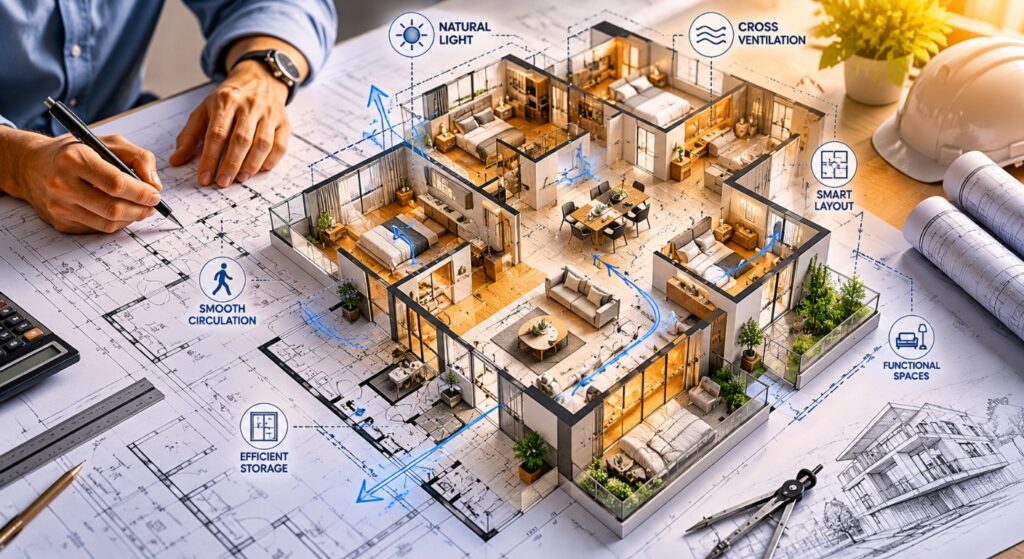
Smart apartment floor plan with natural light, cross ventilation, functional spaces, and efficient modern home layout
3 and 4 BHK Flats in Mukundapur, Luxury Real Estate Projects, Real Estate Investment

How Smart Floor Planning Improves Everyday Living in Modern Homes

mirania How Smart Floor Planning Improves Everyday Living in Modern Homes A home may look beautiful in photographs. The entrance may feel breathtaking. The materials may appear luxurious. However, what truly defines a good home is something people often realize only after they start living there. “How does the space actually feel every single day?” This one has become more important in the modern era. As urban lifestyles continue to grow, homebuyers are no longer focusing only on decorative finishes. They are paying closer attention to something more practical and long-term matter which is ‘floor planning’. A smart floor plan does not organize rooms inside an apartment only. It quietly also shapes everyday comfort, movement, privacy, storage, ventilation, and even emotional ease. And over time, these details influence one’s daily life.   The Story Of Modern Living Has Been Changed The way people use their own homes today is very different from how they lived even a decade ago. A home is no longer just a place to return to after work. It has become: A workspace, A place for relaxation, A social space, A learning environment, And often, a personal wellness zone. Because of this shift, buyers are now evaluating homes in a different manner. Instead of asking only, “How large is the apartment?” People are asking: Does the layout feel open? Is there enough natural light in the apartment? Will the space remain comfortable after a long time? This is exactly where smart floor planning becomes important.   The Difference Between a Large Home and a Well-Planned Home Many buyers still assume that bigger automatically means better. Yes! It’s eventually a true fact. But in reality, large homes which are poorly planned often feel more uncomfortable than well-planned mid-sized homes. For example: Awkward corners are minimized, Circulation space is optimized, Furniture placement feels natural, And rooms connect more smoothly with each other. When planning is done thoughtfully, even a moderate-sized apartment can be felt spacious, breathable, and efficient. This feeling matters more than numbers on paper.   Natural Light Quietly Changes the Entire Experience of Living One of the most underrated aspects of floor planning is how natural light enters into a home. Good lighting does more than improve aesthetics. It directly affects: mood, energy levels, comfort, and the overall emotional experience of living in a space. Homes with better light distribution often feel: larger, calmer, more welcoming, and less mentally exhausting. For this, modern residential design today focuses on: larger openings, better orientation, proper door setup, balanced window placement. A home that receives healthy daylight by the entire day naturally feels more alive. And people may not always explain this technically, as it can’t be explained, but they feel it immediately.   Just Get It Straight – Ventilation Is No Longer a Luxury By the recent years, homebuyers have been becoming significantly more conscious about airflow and ventilation. People now get a very important point that comfort is not created only through air-conditioning. Fresh air movement matters. A well-planned home allows air to circulate naturally across spaces instead of trapping heat and heaviness inside the rooms. This creates: Better indoor comfort, Healthier living conditions, Reduced humidity, And a more breathable environment overall. Cross ventilation, window positioning, and geographical openness now play a major role in residential planning. In many modern developments, ventilation has quietly become one of the strongest indicators of thoughtful design.   Storage Is About Mental Comfort Too Storage is often misunderstood as a purely functional matter in an apartment. But in reality, smart storage develops mental clarity inside a home. Clutter affects how spaces feel. When homes lack proper storage planning: Rooms become visually crowded, Movement feels restricted, Everyday routines become less efficient. Modern buyers increasingly value: Hidden storages, Utility-friendly layouts, Functional wardrobes, Kitchen efficiency, And adaptable storage solutions. The goal is not simply to “fit more things.” It is to create a home that feels calmer and more organized without constant effort. That subtle convenience improves everyday living more than people initially realize.   Flexible Spaces Are Becoming a Necessity Modern lifestyles are no longer fixed. Families evolve. Work routines change. Children grow up. Parents become aged. Daily habits shift. This is why flexible spaces are becoming one of the most valuable aspects of modern floor planning. Today’s buyers appreciate homes where: A study corner may become a workspace, A guest room which is useful for multiple purposes, Open spaces can evolve with future needs. Rigid planning no longer works as effectively as it once did. Flexibility has become the part of a long-term lifestyle. And homes that adapt naturally to changing lifestyles tend to remain relevant for much longer.   Smart Planning Improves Emotional Comfort People rarely think and describe floor planning emotionally. But emotion plays here very real. A poorly planned home can quietly create: Irritation, Congestion, Visual heaviness, Lack of privacy, And mental fatigue. Whereas a thoughtfully designed home often creates: Smoother movement, Visual openness, Peacefulness, And a sense of balance. Even small details influence this experience: The distance between rooms, Natural movement flow, Noise separation, Placement of windows, And how connected or private different spaces feel. When a layout feels easy to use, people experience less conflicts in daily life. That comfort becomes deeply valuable over time.   What Modern Homebuyers Are Prioritising Today Across urban real estate markets, buyer preferences have been becoming more practical and experience-driven. People are increasingly looking for homes that offer: Functional Layouts Spaces that seem useful instead of decorative. Easy Natural Light Homes that feel brighter and more open throughout the whole day. Cross Ventilation Breathable interiors with healthier airflow. Efficient Storage Comfortable spaces without the mess Multi-Purpose Living Areas Designed for work, relaxation, and everything in between. Privacy and Noise Balance Layouts that support both family interactions and personal spaces. These priorities reflect a larger shift in how people define quality living today.   Why Developers Are Paying More Attention to Floor Planning Nowadays Developers have started realising that buyers are

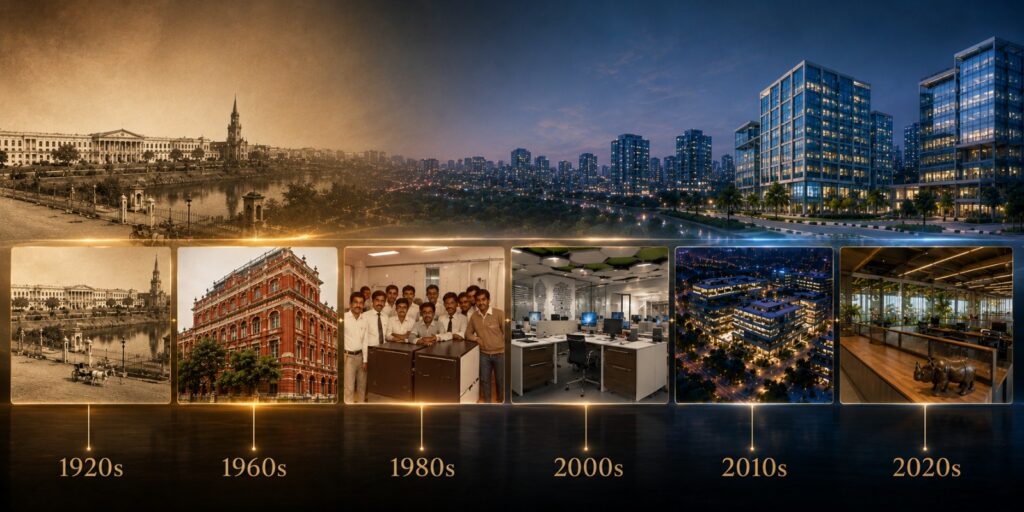
Evolution of commercial real estate in Kolkata from colonial business districts to modern IT and corporate hubs
3 and 4 BHK Flats in Mukundapur, Luxury Real Estate Projects, Real Estate Investment

The Evolution of Commercial Properties in Kolkata: From Babu Culture to Business Edge

mirania The Evolution of Commercial Properties in Kolkata: From Babu Culture to Business Edge Kolkata’s commercial real estate story is not just about buildings. It involves identity, power shifts, and how the city has continually changed the way it operates. To understand why commercial properties in Kolkata are thriving today, you first need to look at where it all started. This city transitioned from colonial bureaucracy to intellectual “babu culture,” faced challenges during industrial decline, and is now quietly becoming a modern business hub driven by IT, BFSI, and growth in infrastructure. 1920s–1940s: The Colonial Business Core (B.B.D. Bagh / Dalhousie Square) In the early 20th century, Kolkata was more than just a major city, it was the commercial hub of British India. B.B.D. Bagh, formerly known as Dalhousie Square, served as the center for trade, finance, governance, and administration. The East India Company operated from this location, and it later became the headquarters of British imperial authority in the east. Landmark structures defined the skyline: Writers’ Building in the 1700’s administrative backbone of the East India Company. General Post Office (GPO). The Royal Exchange Building houses the Bengal Chamber of Commerce. Calcutta Stock Exchange. Gillander House, Ezra Mansion, Currency Building, and Town Hall. These buildings were not just constructions; they represented organized commerce, hierarchy, and control. First High-Rises & the Art Deco Phase The late 1920s introduced something new: vertical ambition. Tower House (1928–29) became Kolkata’s first Art Deco skyscraper, standing 13 stories tall. It represented a shift from classical European architecture to modern urban aesthetics. This era blended colonial revival styles with emerging modernist influences—a sign that Kolkata was already experimenting with global architectural trends. The “Babu Culture” and Early Job Identity Alongside the growth of architecture, “babu culture” emerged. The “babu” was Educated. Clerical or administrative. Linked to government or trading offices. Rooted in stability, hierarchy, and routine. Work culture was marked by: Fixed office hours. A strong focus on job titles and authority. Paper-based administration. There was a strong emphasis on loyalty to institutions rather than entrepreneurship. Commercial spaces showed this mindset; they were functional, rigid, and heavily institutional. 1947–1970s: Partition & Economic Slowdown Post-independence, Kolkata faced a complex transition. Loss of capital status (shift to Delhi) Partition-led refugee influx Industrial and political instability While B.B.D. Bagh remained active, but commercial growth slowed significantly. Many colonial buildings are aged without modernization. First Modern High-Rise The 1960s marked a turning point. The New Secretariat Building introduced modernist high-rise architecture Designed by Habib Rahman, it reflected global influences like the UN Headquarters This phase introduced a new idea — vertical commercial expansion due to space constraints, which would define future urban growth. 1980s–1990s:  The 1980s were largely stagnant for commercial real estate development. Reasons included: Strict labor regulations Declining industrial output Low private investment However, one quiet development changed everything. Birth of Salt Lake Sector V Late 1980s: Salt Lake Electronics Complex (SALTLEC) was established Initially aimed at electronics manufacturing Later evolved into an IT a nd BPO hub This was the foundation of Kolkata’s IT-led commercial revival. 1990s–2000s: Economic Liberalization (1991) India opened its economy, and everything changed. Private investment increased IT industry expanded rapidly Office demand surged Sector V Becomes Kolkata’s IT Core By the 2000s: 170+ IT/ITeS and tech companies operated in Sector V Massive Grade-A office spaces emerged Dedicated industrial township authority (NDITA) was formed Sector V became: The first modern commercial cluster A symbol of Kolkata’s entry into the digital economy Shift in Job Culture The “babu” identity began to evolve: Fixed hierarchy → performance-driven roles Government jobs → private sector opportunities Stability → growth and skill development Workspaces have also changed. Cubicles replaced large clerical halls Technology became central to operations Speed and efficiency gained importance 2010s–2020s: New Town–Rajarhat: The New Growth Engine Recent data shows: 5.7 million sq. ft. office absorption (2022–H1 2025) New Town leasing grew 3.5× in just two years Vacancy rates dropped sharply Rentals increased by over 30% The major occupiers include: TCS, Capgemini, Cognizant, Genpact HDFC Bank, Ericsson Government-Led Tech Ecosystem Bengal Silicon Valley Hub (200 acres) Bengal Fintech Hub (70 acres) Data center investments by global players Infrastructure Boost Metro connectivity (Orange Line) Elevated corridors A planned commercial supply of over 2 million sq. ft.  From Babu Culture to Business Agility: The Shift in Work Culture This transformation is not only physical but also cultural. Then: Babu Culture Fixed roles Paper-based systems Hierarchical structures Limited scalability Now: Modern Work Culture Flexible workspaces Tech-enabled operations Startup ecosystem growth Performance-driven roles Global connectivity Today’s workforce demands the following: Speed Scalability Infrastructure Experience-driven work environments Commercial real estate has evolved to accommodate this shift. Why Kolkata’s Commercial Geography Shifted The movement from the CBD to Sector V and New Town is not accidental. Space Constraints in CBD Old districts, such as B.B.D. Bagh: Limited expansion potential Congestion issues Outdated infrastructure Need for Grade-A Office Spaces Modern businesses require the following: Large floor plates Smart infrastructure Parking and accessibility Infrastructure-Led Growth New areas succeeded because of the following reasons: Roads, metro, and planning came first Commercial followed naturally Integrated Ecosystems New Town offers: Offices + residential + retail + lifestyle A complete business environment  Where Mirania Horizon Fits into This Evolution Mirania Horizon — Where Business Finds Its Edge Mirania Horizon is not just another commercial development. It is designed to respond to the new Kolkata population. It reflects: The shift from rigid office formats to flexible business environments The demand for future-ready infrastructure The need for strategically located commercial spaces near growth corridors How It Contributes to Kolkata’s Growth Enabling Scalable Businesses Modern enterprises require spaces that grow with them. Mirania Horizon is aligned with this requirement. Supporting New-Age Work Culture From startups to established firms, the project caters to businesses that value agility and efficiency in their operations. Strengthening Emerging Commercial Corridors By being positioned within Kolkata’s evolving commercial ecosystem, it contributes to the decentralization of business activity. Offering Infrastructure That Matches Demand With features such as high-quality

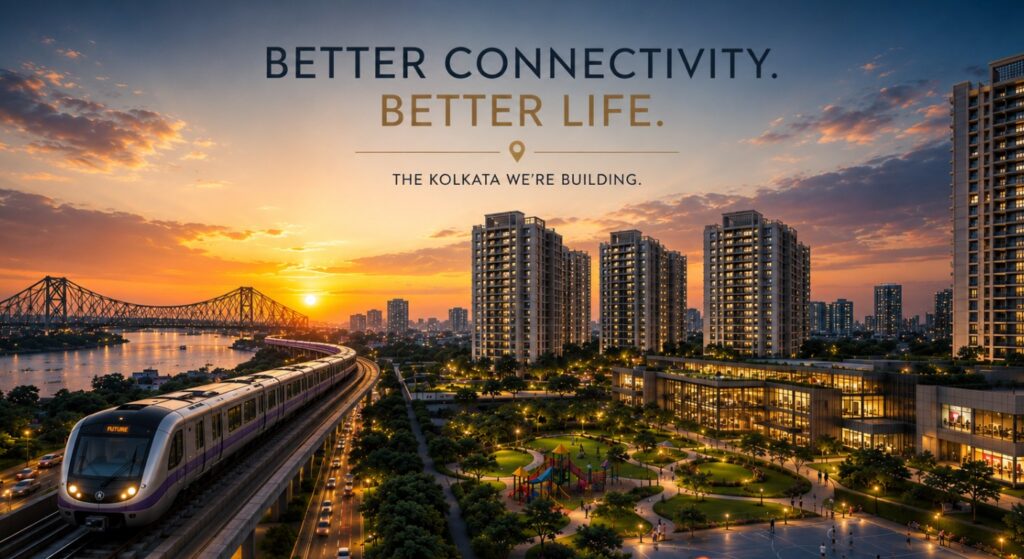
Kolkata Metro connectivity with modern residential apartments and urban infrastructure development
3 and 4 BHK Flats in Mukundapur, Luxury Real Estate Projects, Real Estate Investment

How Kolkata Metro Is Quietly Changing the City’s Real Estate Story

mirania How Kolkata Metro Is Quietly Changing the City’s Real Estate Story Kolkata has been moving at its own pace by years. People is getting homes based on familiarity, affordable prices, or proximity to family. Long travels were accepted as part of the everyday routine. Areas far from the city’s core often remained unseen, despite having great space and development potential. That reality is changing fast. The expansion of Kolkata’s metro network is becoming more than just improving transportation. It is changing how people choose homes, where companies wish to operate, and how investors evaluate property. Across the city, especially along growth corridors like EM Bypass, New Town, Joka, Behala, and Rajarhat, metro connectivity is beginning to shape a new map. And this transformation is not temporary. It is structural. The City nowadays Is Becoming More Connected Than Before In major cities, infrastructure become the direction of growth. Kolkata is now entering that phase. Many residential pockets remained disconnected from business districts and commercial hubs before. Today, with metro expansion across multiple zones, areas that once felt distant are becoming far more accessible. A location that demanded a tiring 90-minute travel once may now take half the time. That single shift changes everything for not only a working professional, but also a family, or even a business owner. People no longer want only a home. They want convenience. They want time back. That is exactly why metro-connected areas are suddenly attracting stronger demand. Why Metro Connectivity Increases Property Value Whenever a metro line reaches a locality, the surrounding real estate market usually reacts in phases. At first, there is curiosity. Then comes infrastructure development. Roads improve, retail enters, commercial activity rises, and eventually buyer demand increases. This is already visible in several parts of Kolkata. Properties located close to metro stations are commanding noticeable premiums compared to similar projects in disconnected areas. In many cases, homes within walking distance of a station are seeing significantly better resale interest and rental demand. The reason is simple. Good connectivity reduces daily friction. And in real estate, convenience always creates value. Buyers today understand that a well-connected property is not just easier to live in. It is also easier to rent, easier to resell, and more likely to appreciate over time. Homebuyers Are Thinking Differently Now A few years ago, affordability dominated most purchase decisions in Kolkata. Buyers would often compromise on travel time if the apartment price looked attractive. That mindset is slowly evolving. Today’s buyers are calculating life differently. They are asking: How long will it take to go Salt Lake Sector V? Is there a metro station close to the project? May this location grow in the upcoming days? Can this property generate rental income later? Will the location become more valuable with infrastructure expansion later? This shift is especially visible among younger professionals, first-time buyers, and investors. People are beginning to value daily efficiency as much as square footage. Saving even 20 to 30 minutes every day has become meaningful. Over time, that improves productivity, work-life balance, and overall quality of living. The Rise of Transit-Led Residential Hotspots Several emerging pockets in Kolkata are benefiting directly from metro-led growth. New Town and Rajarhat Once considered peripheral zones, these areas are now among the city’s strongest real estate destinations. With IT hubs, wide roads, social infrastructure, and expanding metro connectivity, they are attracting both end-users and investors. The appeal is balanced. People can work, live, shop, study, and commute within the same urban ecosystem. Behala and Joka The metro extension has significantly improved the perception of these areas. Localities that previously struggled with accessibility are now witnessing renewed residential interest. For many middle-income families, these zones offer a practical mix of affordability and future growth potential. EM Bypass Among all emerging corridors, EM Bypass has perhaps the strongest strategic advantage. It connects major parts of the city while also linking important healthcare zones, commercial districts, IT corridors, and residential clusters. As metro connectivity strengthens around this belt, the region is increasingly being viewed as one of Kolkata’s most important long-term growth corridors. Commercial Real Estate Is Growing Even Faster While residential demand is improving steadily, the commercial sector is behaving even more aggressively to metro expansion. Business houses focus deeply on accessibility. A company operating from a well-connected office location benefits in multiple ways: employees commute more easily, clients reach faster, and the surrounding ecosystem develops more quickly. That is why metro-linked commercial zones are seeing higher leasing activity and growing demand for Grade-A office spaces. Areas near transit corridors are also becoming more attractive for: co-working spaces, retail developments, business parks, and mixed-use commercial projects. Investors are noticing this trend as well. Commercial assets near strong connectivity hubs often generate better rental yields and stronger long-term capital growth compared to isolated locations. Trends in the Office Market: 60-70% spike in office leasing activity (recent cycles) Absorptive capacity of IT/ITES and BFSI   Commercial Capital Growth: Commercial assets near metro nodes appreciate 30%+ Increasing demand for Grade-A office spaces and business parks Commercial Asset Performance Comparison Metric Pre-Metro Post-Metro Rental Yield 5–6% 7–9% Capital Value Growth 6–8% 12–15% Occupancy Rate Moderate High     The Investment Shift Has Already Started Kolkata’s investors are becoming more location-conscious than ever before. Earlier, many investments were driven mainly by price. Now, infrastructure plays a central role in decision-making. Investors are actively looking at: upcoming metro corridors, under-construction infrastructure zones, interchange hubs, and developing micro-markets with long-term upside. The logic is straightforward. Buying early in an infrastructure-growth cycle often creates better appreciation opportunities later. That is why areas surrounding future metro influence zones are attracting increasing attention from both retail and serious investors. Buyers Want More Than Just Apartments Another important shift is happening quietly. Modern buyers are no longer satisfied with standalone buildings and basic amenities. They are looking for complete lifestyles. They want: secure gated communities, better ventilation and open space, nearby schools and hospitals, retail convenience, organized infrastructure, and reliable

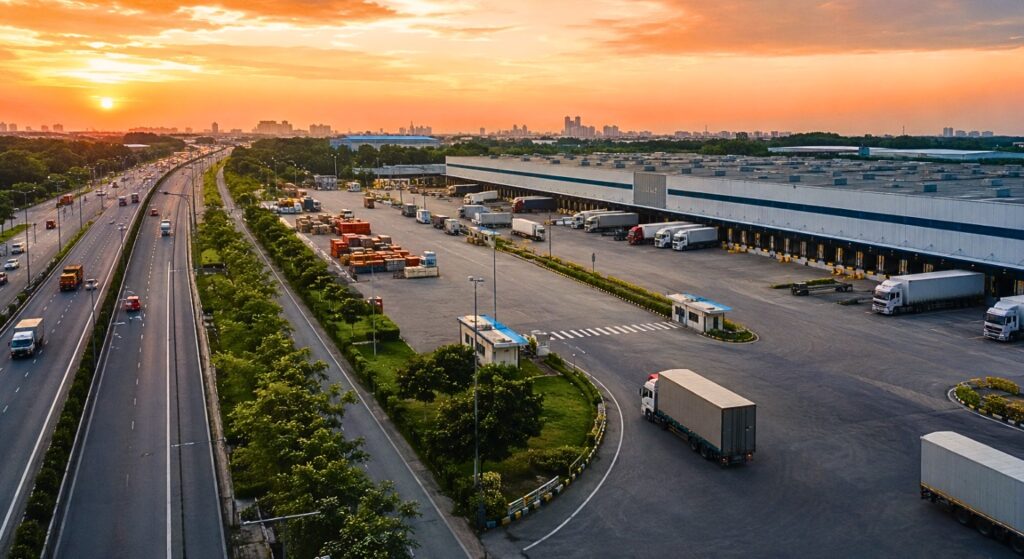
Large logistics warehouse near EM Bypass Kolkata with trucks, transport infrastructure, and industrial distribution hub
3 and 4 BHK Flats in Mukundapur, Luxury Real Estate Projects, Real Estate Investment

Why EM Bypass–Adjacent Warehousing Is Becoming Kolkata’s Smartest Bet?

mirania Why EM Bypass–Adjacent Warehousing Is Becoming Kolkata’s Smartest Bet? Online shopping has really changed everything. Before, it was fine to have warehouses way outside the city, and no one really minded. But now, if something is even half a day late, customers will complain in their reviews. That’s why having places along the EM Bypass starts to make a lot of practical sense for businesses. Instead of sending out deliveries from far-off areas, companies can keep their products closer to where most customers are. This cuts down on a few things: How far each delivery has to travel. How long it takes riders to complete their routes. And needing a bunch of small, separate warehouses. And yes, it directly helps with getting things delivered on the same day or the next day, which is something customers just expect now.   Fast-Moving Goods Need to Be Quick and Reliable How fast-moving consumer goods (FMCG) get distributed is a bit different from online shopping, but the idea about location still applies. Shops don’t just need things delivered quickly; they need to know they’ll get them on time, every time. Having a warehouse on the EM Bypass helps companies restock their shelves more quickly and efficiently. For instance, getting products to busy shopping areas like Kasba, Garia, Nalmuri or even some parts of Central Kolkata becomes much easier to manage. There’s another good thing about this that people don’t always notice: you don’t need to keep as much extra stock on hand, because you can get new supplies faster. Just doing that helps businesses use their money better.   The Good Roads and Facilities Are a Big Deal (And People Don’t Always Appreciate It Enough) Many companies in Kolkata still pick warehouse spots based only on how cheap they are. But cheaper areas often mean problems like bad roads, unpredictable traffic, or not being well-connected. The EM Bypass area avoids most of those issues. Over time, this area has gotten: Roads that are wide enough for big trucks. Several flyovers that genuinely cut down on how long trucks have to stop. Good connections to smaller roads. And an expanding metro system that makes it easier to get around. For running things, this just means one important thing: Your trucks can keep going instead of sitting in traffic. And in the shipping business, trucks sitting still means losing money.   Rent vs. What You Save on Operations – The True Picture Sure, warehouse rents around the EM Bypass might not be the cheapest ones in the whole city. But just looking at the rent is a common mistake many businesses make when they’re starting out. A smarter way to figure things out would also include: Saving money on gas because deliveries are shorter. Less wear and tear on vehicles. Quicker delivery times, meaning you can send out more items each day. Fewer fines for not meeting delivery promises. When businesses see the whole story, a lot of them figure out that paying a bit more in rent here actually means they spend less overall on shipping each order. That’s the number that really counts.   Medium-Sized Warehouses Are Becoming the Standard Something else that’s changing is that companies aren’t just looking for huge warehouses anymore. There’s more and more need for medium-sized places in good spots that can serve as local distribution centers in the city. The EM Bypass area is a perfect fit for this. Instead of just having one big warehouse far away, companies are now using a combination of things: A main place to store stuff. And one or more distribution centres placed in smart locations. And in Kolkata, the EM Bypass often ends up being the obvious pick for these additional centres.   A Key Connection Point, Even Beyond Kolkata While people mostly talk about delivering things within the city, there’s a bigger reason for this location. Kolkata is still an important way to get to: Markets in Eastern India. The Northeast region. And trade routes across the border into Nepal and Bhutan. Warehouses near the EM Bypass let trucks get onto the main highways faster, making it easier to send goods between cities. For shipping companies that manage deliveries across many regions, this makes things much less complicated.   What Businesses Really See on the Ground If you talk to the people who actually run things, not just the ones who plan, you’ll hear the same things over and over. Warehouses near the EM Bypass often give them: Dispatch times that are easier to predict. More drivers available because the routes are simpler. Fewer delays from traffic jams inside the city. And better results for meeting delivery promises. These aren’t just ideas; you can see them in the daily numbers and how things perform.   Why More and More Companies Are Choosing This Area A few things are making more businesses want to be in this corridor: More and more online orders are coming in all over Kolkata. More quick-delivery services are popping up. Retail partners are expecting faster service. and the need to cut shipping costs without slowing things down. Basically, there’s less room for things to be inefficient. And when that’s the case, choosing the right spot becomes much more critical.   To Wrap Things Up People wanting warehouses near the EM Bypass isn’t just a fad or some temporary trend. It’s really about how supply chains are changing in the real world. For companies that sell everyday goods, it means they can deliver things more consistently and reliably. For online businesses, it helps them get orders out quicker. And for shipping companies, it gives them a more effective place to work from. In a city like Kolkata, where traffic, how crowded it is, and the landscape all matter, having the right warehouse in the right spot isn’t just a nice-to-have anymore. It’s a huge leg up on the competition.

NRI investment opportunities in Kolkata real estate with commercial and residential growth illustration
3 and 4 BHK Flats in Mukundapur, Luxury Real Estate Projects, Real Estate Investment

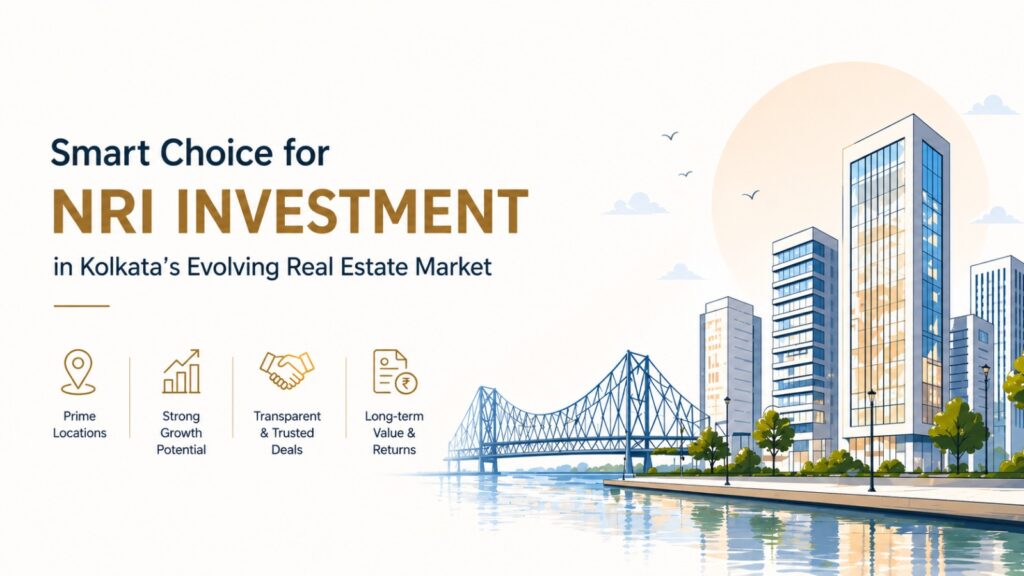
Why Mirania Realty Makes Practical Sense for NRI Investment in Kolkata

mirania Why Mirania Realty Makes Practical Sense for NRI Investment in Kolkata Kolkata isn’t the kind of market that suddenly grabs headlines. It never has. But if you’ve been watching it over the last few years, you’ll notice something—it’s not standing still anymore. Infrastructure is improving. Certain areas are developing faster than expected. And real estate, while still relatively affordable, has started to move. For NRIs, that creates a situation worth paying attention to. Not urgent, not speculative—but practical.   What’s Actually Happening in the Market Let’s not overstate it. Kolkata is still more affordable than most major cities. That hasn’t changed. What has changed is momentum. Metro expansion is pushing development outward. Some micro-markets are becoming more relevant than they were even five years ago. And demand—especially in better-planned residential spaces—has picked up. Prices have already reacted a bit. Not sharply, but enough to signal direction. That usually means one thing: the early advantage phase doesn’t last forever.   Why NRIs Are Circling Back For a long time, Kolkata wasn’t the first choice for NRI investment. Now it’s coming back into consideration, and the reasons are fairly straightforward. You’re not entering at inflated prices. That’s the first thing. Second, the growth you’re seeing is tied to actual infrastructure—not just speculation. That makes a difference over time. And then there’s the lifestyle factor. Not everyone talks about it, but it matters. Kolkata is still a city you can live in without the constant pressure you see elsewhere. Rental demand is improving too. Not aggressively, but steadily enough to be relevant.   Where Mirania Realty Stands in This Real estate decisions don’t depend only on the city. The developer plays a big role, especially when you’re managing things from outside India. Mirania Realty’s approach is fairly grounded. They’re not chasing over-designed concepts or pushing unnecessary premium positioning. Instead, the focus seems to be on getting the fundamentals right—location, usability, and long-term viability. Projects are placed in areas that are expected to grow, not just ones that are already saturated. Layouts are practical. Not everything is about aesthetics; usability matters more once people move in. And importantly, the process is structured. For NRIs, that reduces friction more than anything else.   A Quick Note on Commercial Investments There’s also a visible shift toward commercial real estate in Kolkata. You can see it in the growth of business hubs, co-working spaces, and smaller enterprise clusters. Demand for office spaces—especially well-connected ones—is increasing. Mirania Horizon is one example aligned with this shift. It’s designed with actual business use in mind, not just as an investment label. From a numbers perspective, commercial properties can offer: stronger rental yields longer lease commitments relatively stable tenants Of course, it depends on the asset and location. But it’s no longer something to ignore.   What Really Matters for NRIs When you’re investing from abroad, priorities become clearer. You’re not looking for noise—you’re looking for reliability. Things like: whether the location will still hold value years from now whether pricing is justified, not just marketed well whether the process is manageable without constant follow-up whether the asset will remain relevant over time Mirania Realty seems to be working within that framework, which is why it fits into this conversation.   A More Grounded Way to Approach This Market If you’re considering Kolkata, it helps to keep expectations realistic. Look at areas where development is still in progress—that’s where most of the upside sits. Consider mixing residential and commercial, instead of relying on just one type of asset. And spend time understanding the developer. It’s often the difference between a smooth experience and a frustrating one. Also, this isn’t a short-term play. Kolkata rarely works that way.   The Part People Don’t Always Say Out Loud There’s also a personal side to this. For many NRIs, buying property in Kolkata isn’t just about returns. It’s also about having something here—a base, a fallback, or even just a sense of continuity. It doesn’t drive the entire decision. But it does influence it. Timing—Why It Still Matters Kolkata is at a stage where growth is visible, but not fully priced in. That gap is where most investment decisions tend to make sense. Once everything becomes obvious, it usually becomes expensive too.   Final Thought Kolkata isn’t trying to compete with faster, louder markets. It doesn’t need to. What it offers right now is something simpler—a market that’s improving, still accessible, and gradually becoming more relevant. Mirania Realty, in that context, isn’t about big claims. It’s about execution in a market that’s quietly moving forward. And for the right kind of investor, that’s usually enough.

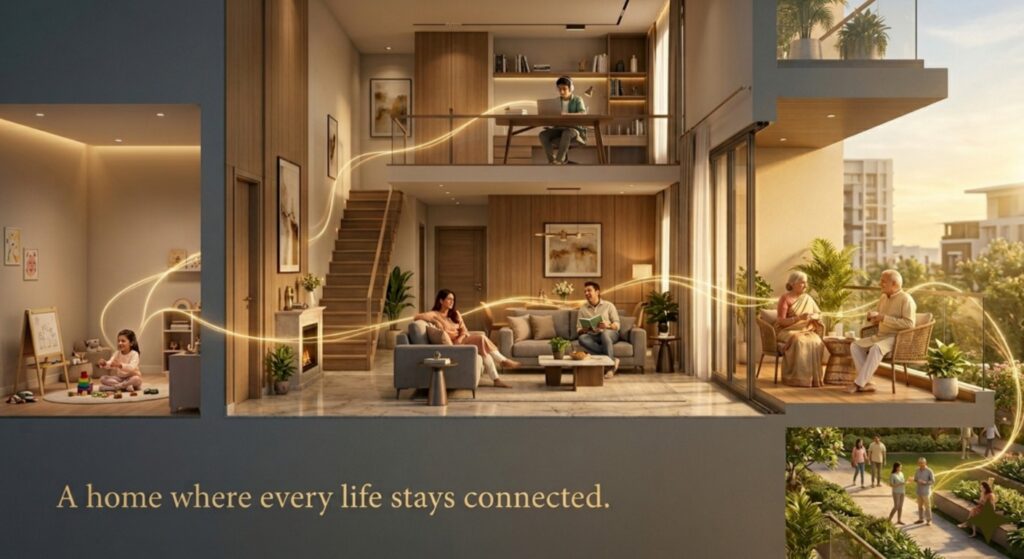
Multi-generational family living in a modern apartment with shared spaces and connected lifestyle
3 and 4 BHK Flats in Mukundapur, Luxury Real Estate Projects, Real Estate Investment

From Movies to Matches: Why Social Infrastructure Matters When Buying a Home

mirania From Movies to Matches: Why Social Infrastructure Matters When Buying a Home Buying a home is never just about the space, the cost, or the number of bedrooms. A home is where life actually happens. It’s where Sunday movies become family traditions. Where kids grow up playing with friends downstairs. Where grandparents enjoy the evening sun and reminisce about stories of the past. Where parents find some peace and quiet after a long day. This is where social infrastructure becomes important when choosing a home. At Mirania Evara, opposite to Metro Cash & Carry, Mukundapur, on the EM Bypass, the meaning of life extends far beyond living in apartments. It’s about living in a place where families grow together with generations of family. A good home is not just about living well. It’s about living together. When a Home Becomes a Place for Family Bonding In today’s fast-moving lives, families may share the same house. However, their lives may become totally different. Parents may be busy with work. Children may be busy with school. Teenagers may have their own world. Grandparents may seek some quiet moments. A well-planned living space brings them all together. At Mirania Evara, shared spaces like The Root and The Loft lifestyle zones, landscaped spaces, indoor games spaces, and community lounges become the natural spaces where families spend time together. These are the spaces where: Kids play around freely Parents socialize with their neighbors Grandparents enjoy their evening walks Families come together during festivals and celebrations And as time passes by, these moments become **memories that stay for a lifetime. Weekend Plans Become Easier Weekend planning is perhaps the biggest challenge in a city like Kolkata. Families end up spending most of their precious time traveling across the city instead of actually spending time with their families. But when your home is well located, weekend planning is not a problem. Mirania Evara is located right along the Eastern Metropolitan Bypass, which is one of the most important connectivity routes in the city. A weekend plan could look like this: Morning: A relaxed walk inside the landscaped spaces of the community. Late Morning: Quick shopping at the nearby Metro Cash & Carry, which is right opposite the community. Afternoon: Lunch at the various cafes and restaurants around Mukundapur. Evening: Catching a movie or hanging around with friends inside the community. When everything is close by, weekend planning is not a problem. Weekends become much more relaxed, meaningful, and family-oriented. A Healthy Social Life for Children A child needs more than just a bedroom and a study space. A child needs spaces where they can grow, explore, play, and develop their social skills. At Mirania Evara, children are raised in a community that promotes social interactions. Play areas, activity zones, and open spaces provide children with opportunities to enjoy their childhood as it should be enjoyed. Rather than spending more time in front of the screen, they can: Socialize with friends in the community Take part in small cultural activities and festivities Stay physically active Be socially confident Living in an environment that offers these opportunities gives the child something truly valuable a sense of belonging. And parents, of course, are assured of the peace of mind that comes with the knowledge that their children are playing in a **safe and trusted environment**.  A Space Where Teenagers Find Their Independence Teenagers are the stage in life where they begin to find their independence. They want spaces of their own. They want to be able to socialize. They want independence, but in a safe environment. Mirania Evara’s lifestyle spaces provide that. Indoor gaming, fitness, and community spaces provide the teenager with the opportunity to be with their friends without having to travel too far in the city. It allows the teenager to: Make friends in the community Stay physically active Find independence and confidence For the parents, it allows the teenager to find independence, yet remain in a **safe and trusted environment. Making Everyday Life Easier for Working Parents For the working professional, ease of living plays an important part in the quality of life. For parents, the commute to and from the workplace often robs the family of quality time together. Mirania Evara’s strategic location on the EM Bypass near Mukundapur and Santoshpur makes it easier for parents to get to the workplace as well as for the rest of the city, as the major areas of the city are easily accessible via the major roads and transportation networks. The Jyotirindra Nandi Metro Station, which is near the area, also provides easier access to the city’s metro network. This means: More time saved from commuting Easy access to work zones More time to spend with the family and oneself And within the community itself, there are also gyms and wellness areas where one can relax and unwind after a long day. But the truth is, a good home is one that helps strike the right balance in life. Comfort and Care for Grandparents A truly considerate home is one where every member of the family feels comfortable. Grandparents are no exception. What matters most to them are: Morning walks Quiet corners where they can sit and talk with the family Friendly neighbors Easy access to healthcare services Mirania Evara offers spaces such as senior citizen corners and peaceful landscaped areas where grandparents can enjoy their daily routines comfortably. Another advantage of the area is the easy access to healthcare services. Some of the best hospitals in Kolkata are located near the area: Manipal Hospitals Mukundapur Medica Superspecialty Hospital Desun Hospital All of these hospitals provide the best healthcare services with multi-specialty treatments, ensuring that families are always within arm’s reach of the best healthcare support. This is definitely of great comfort to families with senior citizens in the family.  The Real Value of Social Infrastructure Most individuals consider the value of the place and the price appreciation of the area when choosing the best place to

contact us

Mirania Horizon, 1005 EM Bypass Kolkata, West Bengal 700105

M – 033 7148 2042
E – info@mirania.com

Subscribe Newsletter

© Copyright 2026 Mirania Realty LLP | All Rights Reserved.